
Anatomy of Speed: The Art of the Cutaway Vehicles with Mick Hill
In this interview we sit down with Mick Hill, a leading specialist in automotive cutaway artwork, who has dedicated his career to peeling back the layers of metal, rubber, and carbon fibre to reveal the mechanical anatomy of some of the fasted vehicles ever built. Join us as we discuss Mick’s journey, precision, patience, and the passion required to illustrate some of the most complex machines ever built, from F1 to Le Mans legends, to world record-challenging land and water speed machines.
MOTORSPORTSTECHNICAL ILLUSTRATIONFEATURED
TorqArt
12/11/202511 min read
TorqArt: Can you tell us about your journey into technical illustration and what sparked your interest in this field?
MH: I’ve been interested in cars from as far back as I can remember as my dad owned a garage and I was always watching him taking cars apart and asking him how they worked, so it just seemed natural that they became a large part of my life.
My interest in motor racing came about after a friend and I cycled in the pouring rain to the 1974 Race of Champions at Brands Hatch. The noise and smell were just out of this world!
Later that year I went to the motor show at Earl’s Court and came across a set of cutaway drawings of F1 cars, penned by Tony Matthews, one of the best in the business. I knew then that was what I wanted to draw, cutaways of cars, F1’s in particular. I started copying the cutaways and the school that I attended at the time even put on an exhibition of my work.
TorqArt: Upon leaving school, did you undertake any formal training to help prepare you for your career?
MH: When I left school, I enrolled at my local college for a technical illustrator course, thus the long road to illustrating cars started.
TorqArt: Can you tell us about breaking into the industry, and how you managed to secure your first commissioned works?
MH: After leaving college I secured a position with a company producing illustrations for workshop manuals for the Ford Motor Company. After 2 years (and still looking for my first car cutaway) I decided to go freelance.
My first commission was producing technical illustrations for the weekly part works Car Fix It. This was followed by an airbrushed print of Keke Rosberg celebrating his winning of the 1982 world championship. My racing hero was Graham Hill, and in 1985 I created a commemorative print of Graham in his Embassy Hill as a personal tribute, 10 years after his death in an aeroplane accident. The original airbrushed artwork was displayed at the London Rowing Club where they held a commemorative function attended by his wife, Bettie.
My real passion, however, was cutaways but, of course, the racing teams were very reluctant to let an unknown illustrator near their cars even when I offered my services free of charge.
My first break came at the 1985 F1 tyre testing at Brands Hatch. This was my chance to get access to the teams and push to see if I could get the chance to produce a cutaway of an F1 car. As usual everybody was busy and to get close to the personnel was quite difficult. I spotted Peter Warr, so I introduced myself and started outlining my intentions of producing a cutaway. He immediately said he had no objection but as they were very busy at Brands, he suggested I go to Lotus factory, and I could photograph the car there.
A week later I was standing next to a Lotus 97t. I was loaded with 2 cameras, and I took as many photos of the car as I could, with 2 mechanics taking covers and wheels off the car so I could get the reference I needed. Bob Dance was at hand to answer any questions, a true gentleman. I have realised now that it does not matter how many photos you take, some part will either be just out of shot or missing. Now I take over 100 shots whenever I need to get the reference for a car but there will still be something missing! One piece of reference I did get was a mechanic’s backside! I had left the camera on the tripod when we stopped for lunch, and it was quite a surprise when I picked up the prints! So never leave the camera unattended!
In 1988 I moved to South Africa where I produced an airbrush drawing for Honda depicting Honda’s involvement in F1. This was displayed in all the Honda show rooms in South Africa. I also produced an airbrush drawing for Sasol showing their involvement in motor sport when they became one of Jordan’s sponsors, as well as sponsoring various cars racing in South Africa. Michael Schumacher’s and Nigel Mansell’s sponsors, Camel, commissioned me to produce a series of artworks showing their cars, which were available as posters in one of South Africa’s major motoring magazines. I was also commissioned to produce an artwork of Ayrton Senna’s McLaren which was used in a poster calendar.
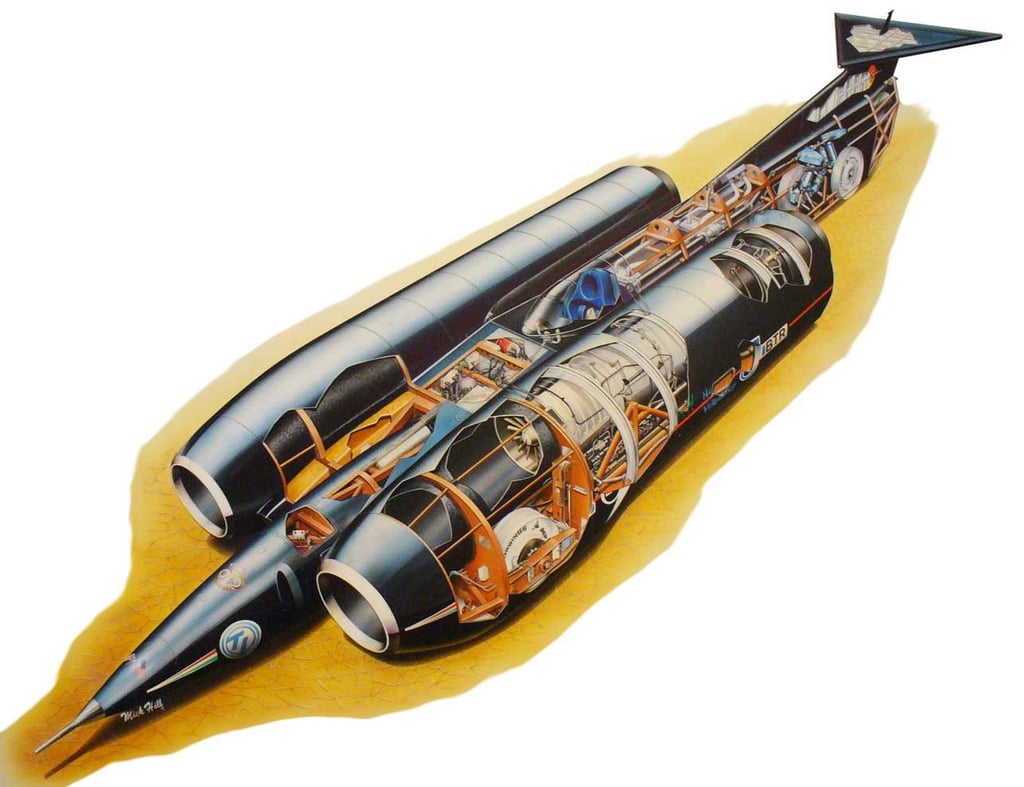
I returned to the UK in 1997 to take up a position producing illustrations for Ford again. During that time, I approached Richard Noble, in the hope of producing a cutaway of his latest land speed record car, Thrust SSC. I was hoping that if the illustration made it to the motoring press, it may give me the exposure I needed.
The car was over 60 foot long and it was a real mission to get an overall view of the car, so I ended up 50 feet in the air balancing on a gantry to get the required shot on which to base the cutaway. With the usual 100 or more reference shots, I produced one of the only real accurate cutaways of the fastest car on earth.
TorqArt: Was there a turning point when you knew that you could sustain a professional career producing cutaway illustrations of vehicles?
MH: Ford had announced a need for cutaways of their vehicles. The company I worked for was given the chance to provide the first one. After 20 years of trying, I was finally being paid for producing cutaways of cars. This was also a new challenge as computers were now making their way into the world of illustration something that I had had little experience of at the time. I was on a steep learning curve and had to very quickly learn the programmes necessary to produce digital artwork.
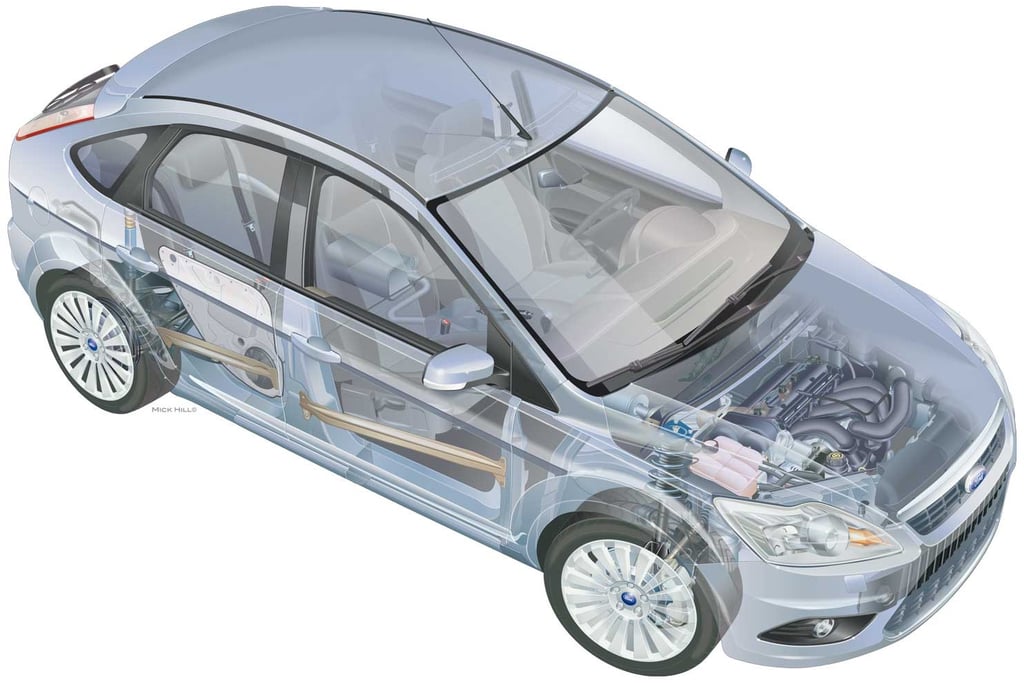
I was approached by an advertising agency responsible for marketing the Ford orchestra who were using instruments made up from parts of the Ford Focus. I produced a ghosted view of the Ford Focus highlighting the components that were used to make the musical instruments.
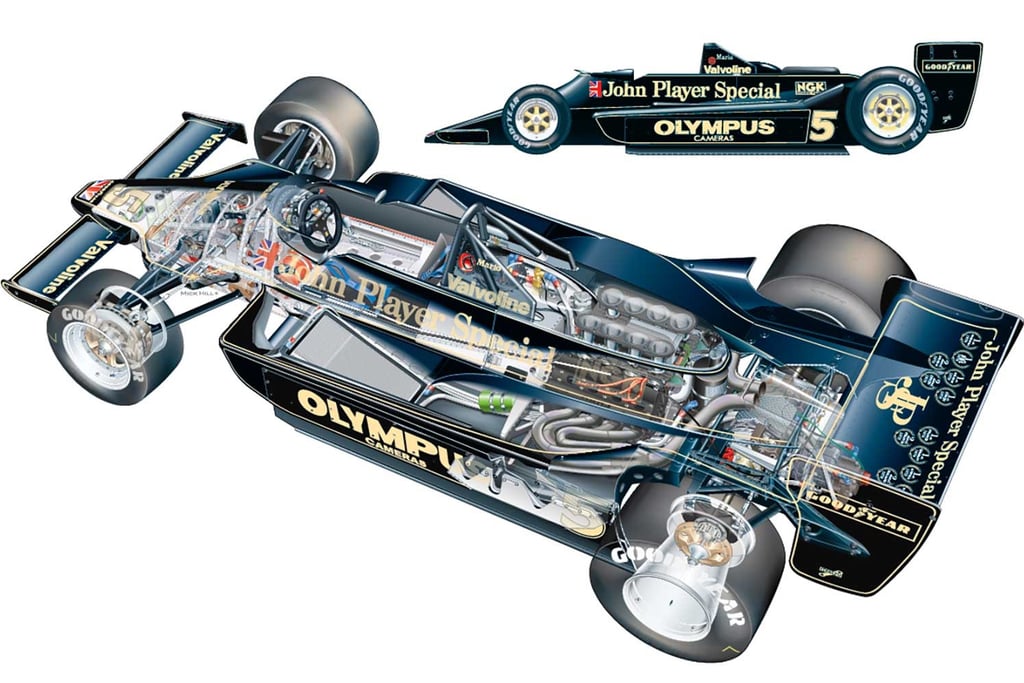
At this point I decided to turn my black and white line drawing of the Lotus 97T into a full colour cutaway. I contacted Clive Chapman at Classic Team Lotus who very kindly sent me some reference photos so I could complete the task.
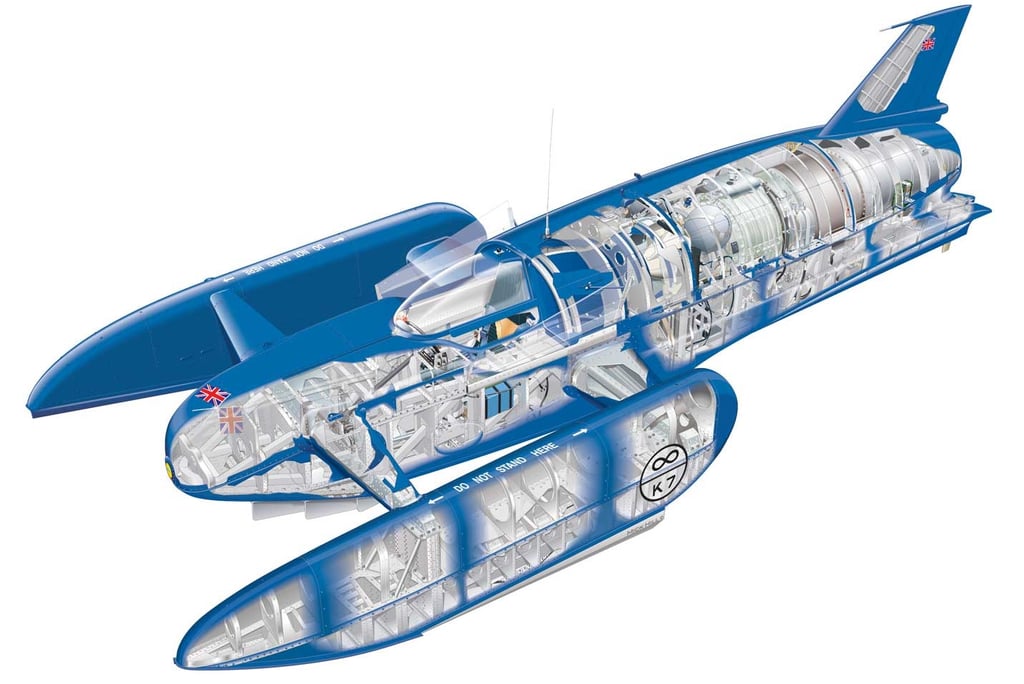
Another subject that fascinates me is the land/water speed record breaking attempts. As a nine-year-old, I remember watching Donald Campbell’s fatal crash his Bluebird on Coniston Water in 1967. This boat, or should I say Hydroplane, always held a fascination for me. When I heard that it was being raised in the hope of restoring it, I could not resist the urge to produce a cutaway.
This was quite a challenge as there were no suitable photos to use as a base for the overall view. I thus had to create the boat as a 3D model from the original plans so that I could get a suitable view on which to base the cutaway. The final illustration took years to complete as I could only illustrate based on the information from photos that appeared on the internet, or from the Bluebird project site, as the boat was slowly being restored.
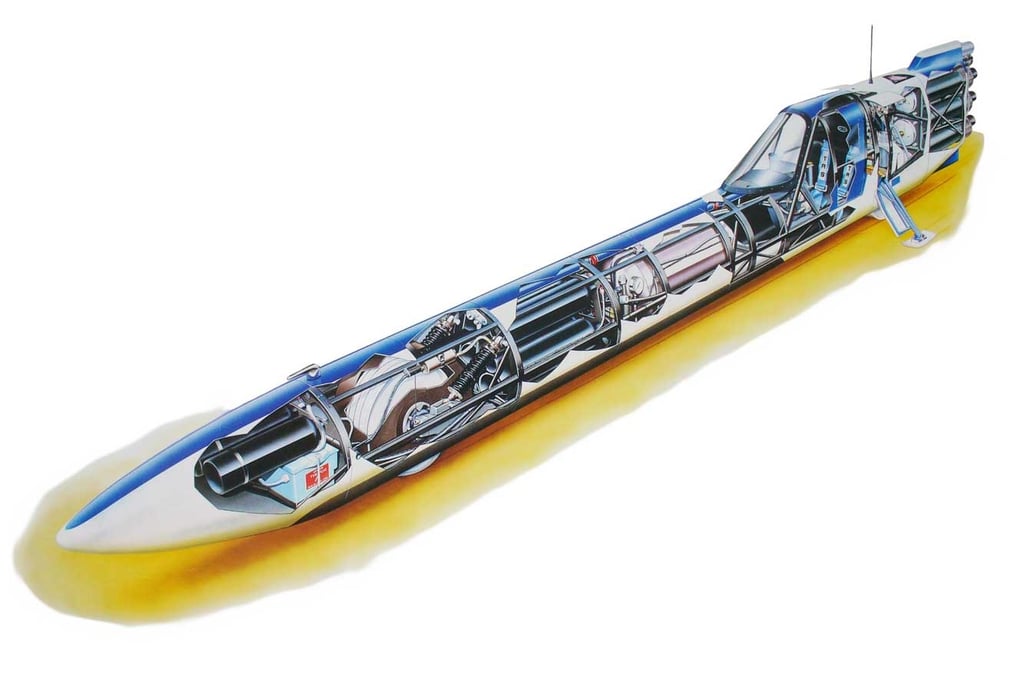
My next work of art was a cutaway of Richard Brown’s rocket bike, Mach 3 Challenger. This was used as a poster to help raise funds for the project, and it was also the last cutaway I did using a paintbrush and airbrush.
TorqArt: Can you walk us through your creative process when starting a new project?
MH: The first step in creating a cutaway starts with finding the subject matter, then getting permission to get next to the chosen car, so that I can take the necessary photographic reference. With the Mclaren MP4/4, to me it seemed McLaren were very reluctant to allow me access to the car, it was a long road of excuses, ignoring emails and phone calls. After almost giving up I found out that Kiklo Spaces had a McLaren MP4/4 in their collection.
After contacting them, they agreed to allow me access, we arranged a date, and before long I was standing next to Ayrton Senna’s Mclaren, camera in hand. Firstly, you have to find the best angle to photograph the car which would allow you to show as much detail. This usually involves a ladder, bearing in mind that you have to show objects that are hidden from view i.e. parts inside the tub etc. I then get as many photos as possible of the various sections of the car. I normally take about 100-150 shots, even then there always seems to be areas of the car that are missing from the shots.
The next step is to create an overall illustration. It’s strange how many people think that because the illustration is created on a computer, it’s a lot easier to produce than the old drawing board method. I would say that working on a computer means you have to draw each part as accurately as possible, unlike the paint brush method where you could just use a splash of colour to create an object, as its most likely going to be reduced when printed and therefore will tighten everything up.
TorqArt: What are some of the key techniques or tools that you use in your illustrations, and has technology influenced your approach to art over the years?
MH: On a computer you have to draw all of the parts in greater detail, this means you get a far more detailed illustration, but it does take a lot longer to produce than the old method. I did have someone contact me who had just purchased the Adobe Illustrator program. They wanted to know which button they need to press for it to create an illustration based on the photograph they had uploaded. It amazes me how many people think that because an illustration is produced on a computer it’s just a case of just pushing a button!
The only real difference between drawing on a drawing board and drawing on a computer is the pen is replaced by the mouse, and the art board is replaced by the monitor. Of course, the main advantage using a computer is that I no longer have string stretched across my studio to find the vanishing points for the illustration! Another great advantage is that it’s a lot easier to change or update artwork on a computer and obviously there’s no need to spend hours cutting hundreds of masks and mixing colours etc. However, without the basic understanding of perspective and how to construct vanishing points, shadows, reflexions and ellipses, then the artist cannot hope to produce a technically correct illustration. The need to have a technically minded approach also helps as sometimes it’s up to the illustrator to work out what’s going on when reference is a bit scarce and not so clear. I can honestly say that, without the knowledge and experience gained using the old drawing board method, my style on computers would probably look too flat and lacking depth.
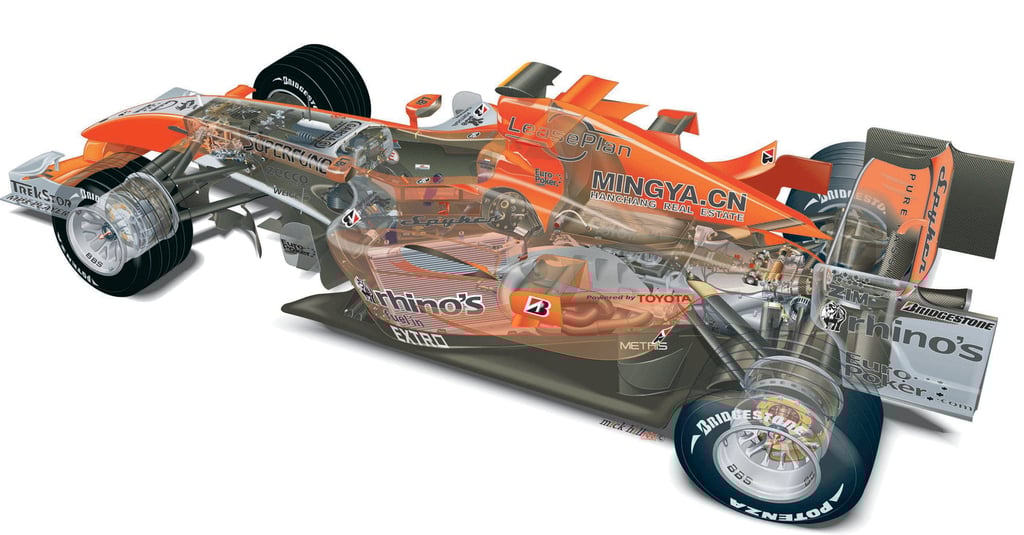
A cutaway is so called because of the way in which it is presented with areas cut out of the subject so the viewer can see what lies beneath. Cutting chunks out of the subject means that a lot of information is ‘lost’ because the viewer can only see what appears in the ‘cut out’. I try to use more ghosting as, after all, the whole idea of a technical illustration is to show as much information about the subject matter as possible. There are times, of course, when cutting an area is the only way of showing what’s going on to avoid confusion.
TorqArt: Could you highlight some of your favourite projects, and what made them special or challenging?
MH: The most enjoyable projects have to be the F1 cars that I have illustrated, along with the Thrust SSC, the Gillette Mach 3 Challenger and Donald Campbells Bluebird K7.
Whilst I enjoyed working on all the cutaways that I have produced over the years, the most enjoyable ones are the ones produced out of pure interest and without financial reward. I have never been paid for any of the above as I wanted to produce a cutaway of these vehicles purely from an enthusiast’s point of view. The most rewarding cutaway has to be the McLaren MP4/4 which, due to the time and amount of effort to get next to it, was well worth it if I have to say so myself.
TorqArt: What advice would you give to someone looking to start a career in automotive art, and what does the future hold for automotive cutaway illustrations?
MH: My first thought would be to enjoy what you do as a career, sadly with the aid of computers I think the skill is slowly being eroded, this was something that happened with Ford. They decided that their authors could use basic illustrations made from their design programs to get the point across, so illustrators were basically not needed as much as they once were.
Now with the advancement of computer programs, technical illustrations can be produced from the 3D data used to create the actual object, i.e. programs that were used to design, in this case, a car, like so many of the skills in the world over the decades, illustrators are slowly being replaced by computers. I just feel lucky that I was able to make a career from what I love doing. I think I just made it to retirement, although I still love illustrating and I continue to keep my eye on the ball.
TorqArt: What has been the most rewarding aspects of your career as a technical illustrator?
MH: The most rewarding part of my career has to be meeting many personalities in the F1 world, including Graham Hill, Ayrton Senna, Niki Lauda and James Hunt to name a few. I have managed to create illustrations of some of the world’s most iconic vehicles which I hope will live on for generations to come.
Another highlight was finally getting a book published, this (like most things), took years to happen. I had contacted many motoring magazines and publishers over the years but sadly in this world, it’s not what you know it’s who you know! I had many rejections from many of the larger motoring magazines even when I offered my work for free! After knocking on many doors, I finally secured a deal with the History Press and in 2020 and Grand Prix Winning colours was published. The new F1 cutaways I have been working on to date will be appearing in the updated version due for release in 2026, covering 75 years of F1. These include the McLaren MP4/4, Lotus 25, Lotus 72, and the Tyrrell P34 six-wheeler, all of which have never been published before.
I think I have been very fortunate in choosing a career that allowed me to be creative and make it last my whole working life.
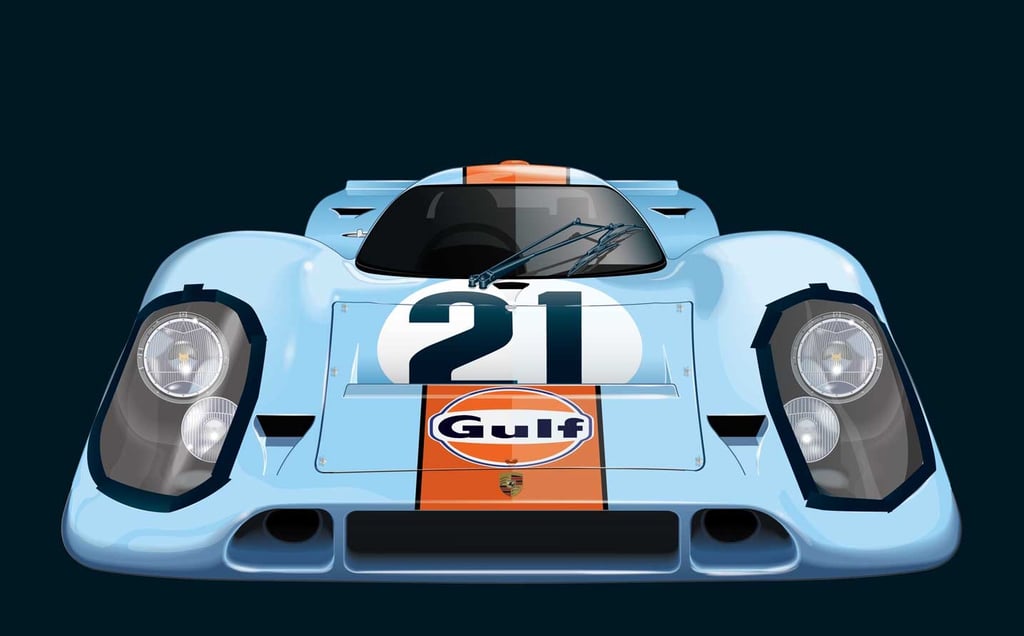
Porsche 917 - Mick Hill
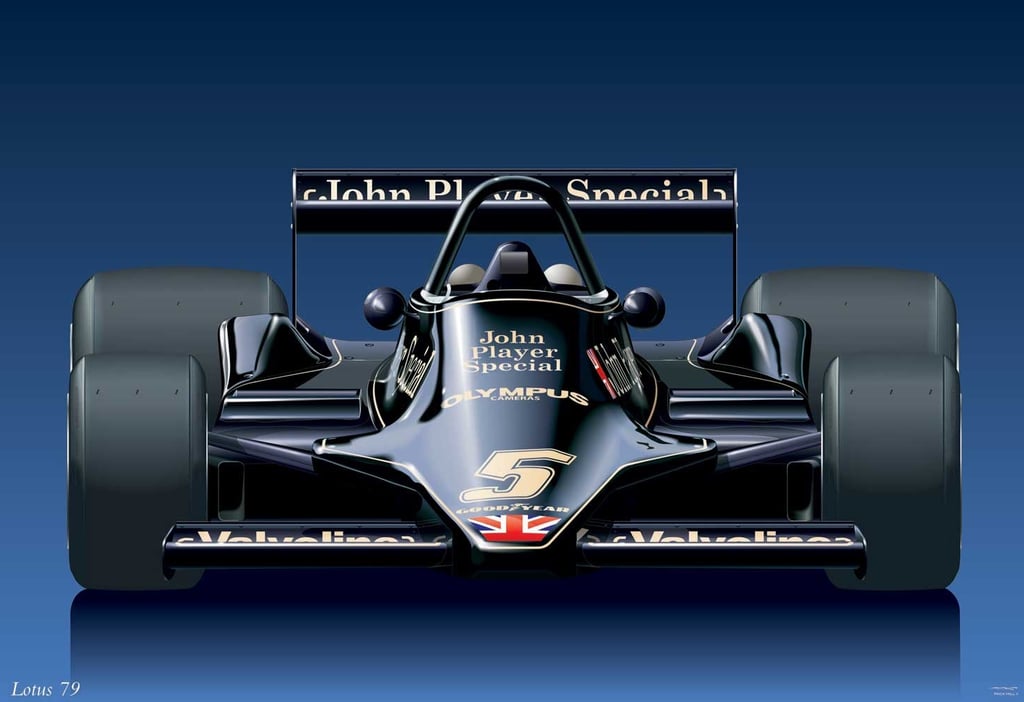
LOTUS 79 F1 - Mick Hill
LOTUS 79 F1 CUTAWAY - Mick Hill
Ford FOCUS CUTAWAY - Mick Hill
BLUEBIRD K7 CUTAWAY - Mick Hill
GILLETTE MACH 3 CUTAWAY - Mick Hill
THRUST SSC CUTAWAY - Mick Hill
MIDLAND M16 F1 CUTAWAY - Mick Hill

