Inside the Machine: An Interview with Technical Illustrator Jim Hatch
In a world of 3D design tools and photorealistic renders, there is a rare breed of artist who approaches a subject with 2D vector lines and subtle shading. This is the craft of the technical illustrator - a field in which Jim Hatch has earned a reputation as a master. Jim has spent decades translating complex engineering into beautifully executed cutaways, poster art, and technical illustrations for some of the world’s most iconic brands. Today, we sit down with Jim to discuss his meticulous process and the evolution of the industry, giving us a glimpse into his creative journey.
TECHNICAL ILLUSTRATION
TorqArt
2/4/20267 min read
Torqart: What was your earliest interest in art, and when did you realize you wanted to pursue a creative path?
JH: As a kid growing up in Northern New Jersey in the 1970s - 1980s, drawing was something we did to entertain ourselves - it was always around our family. I was a motorcycle nut and would pour over the magazines in my cold basement dreaming of creating the drawings and visiting the places I saw in California. My childhood was filled with toy cars and countless model kits that no doubt affected my brain.
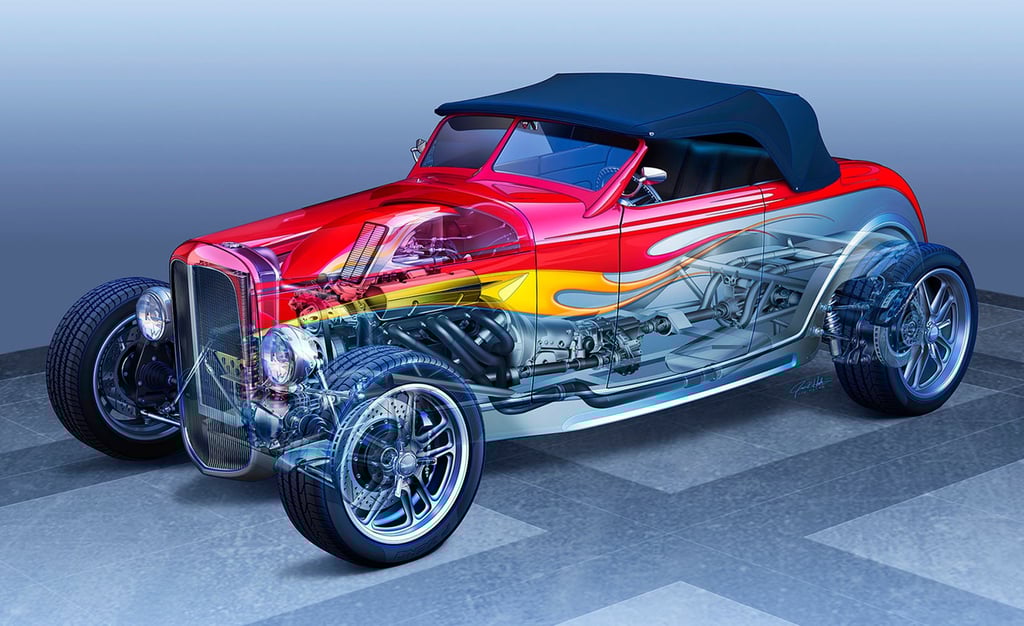
QuadraDeuce ’32 Ford Cutaway © Jim Hatch
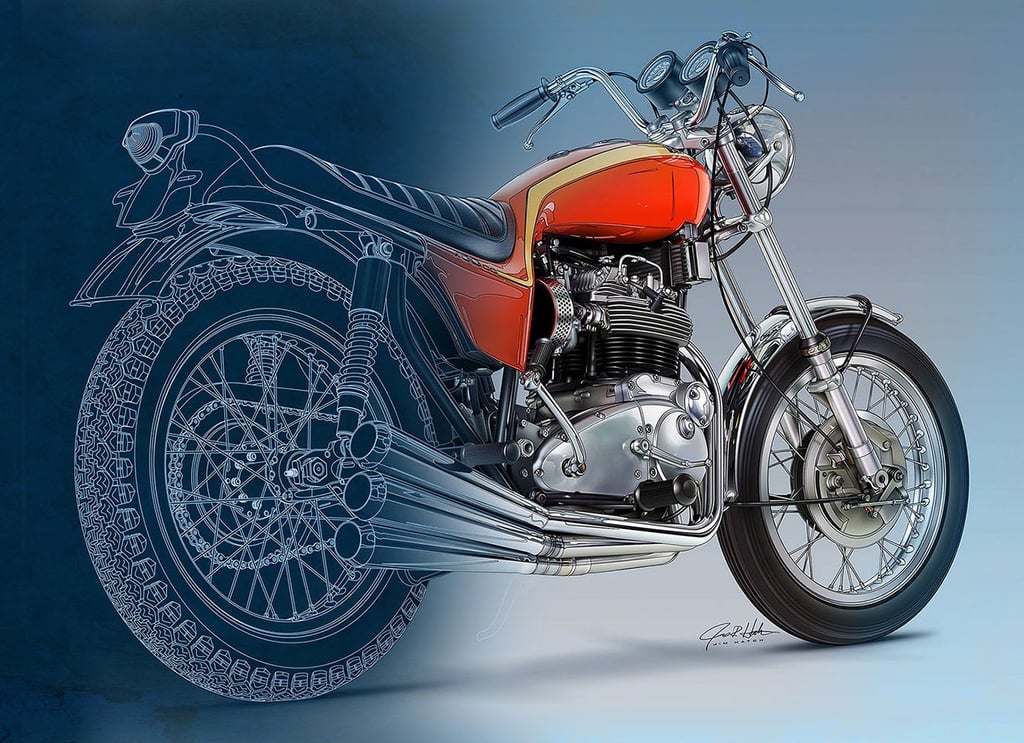
1969 Triumph X-75 Prototype © Jim Hatch
Torqart: Can you run us through your journey to get where you are today, and what led you to specialize in technical illustration?
JH: In high school I had this dream of going to California to attend art school. I was very fortunate to have an uncle who not only encouraged me but took me out for my interviews.
I was accepted into Otis/Parsons School of Design in Los Angeles. It was a life changing experience that I think about often. My drawing teacher Richard Milholland introduced me to the world-renowned Illustrator Kevin Hulsey. After a (take home) test Kevin hired me as his assistant while still in school, then after graduation I went full time.
It was a surreal experience learning from Kevin. Our work was all hand-done at the time and I would ink the work on huge pieces of illustration board and Kevin would airbrush it all, for the likes of Toyota, Infiniti, Acura and many others. Besides being a painter, this experience helped me focus on my technical illustration side.
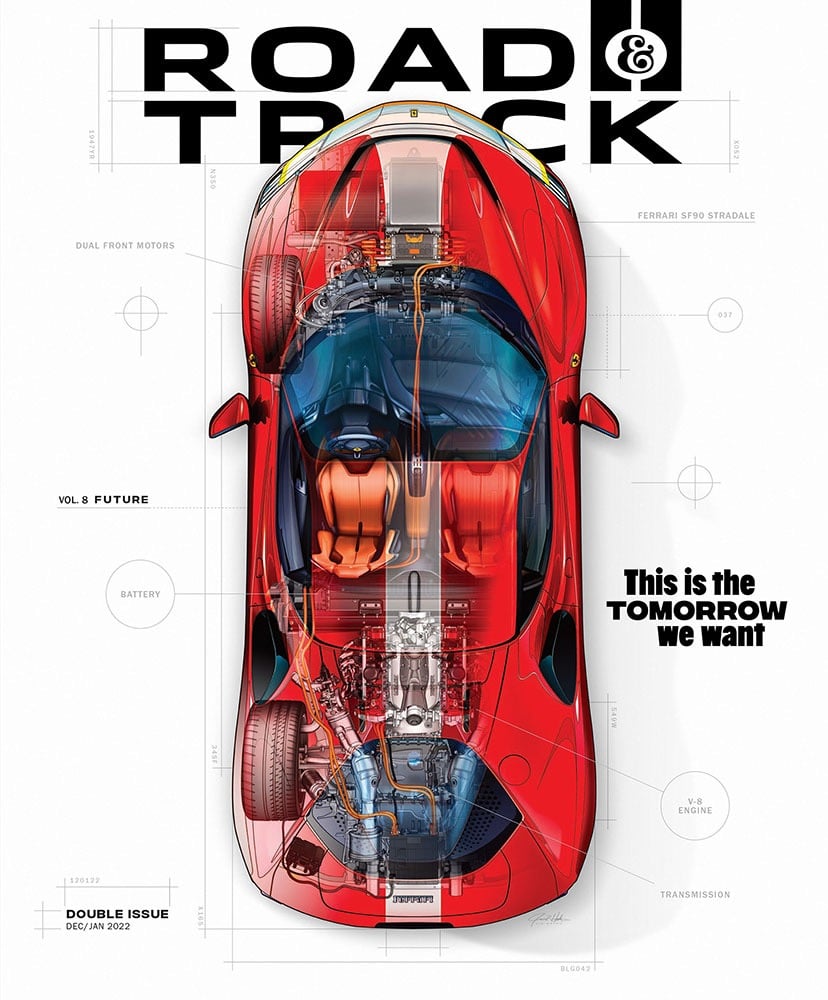
Road & Track Cover Illustration © Jim Hatch
Torqart: Tell us about your role at the Petersen Automotive Museum, and did your time working there influence your future career path, including the launch of your own studio?
JH: At Otis/Parsons, fellow illustrator Mike Meaker went on to become the artist for the Natural History Museum and referred me to the team that built the Petersen Museum from the ground up. We had a blast, often working 12 hour days to get it open.
My initial role was Exhibit Designer, evolving into Art Director / Illustrator. I met so many fascinating and famous people connected to the car world - it was heaven for a car nut. I created connections that lasted a lifetime. One memorable moment was seeing the IMSA Nissan GTP on display and sneaking down after work to take it apart and draw it. After 6 years I wanted to dedicate all my time to drawing, so I gave it a go.
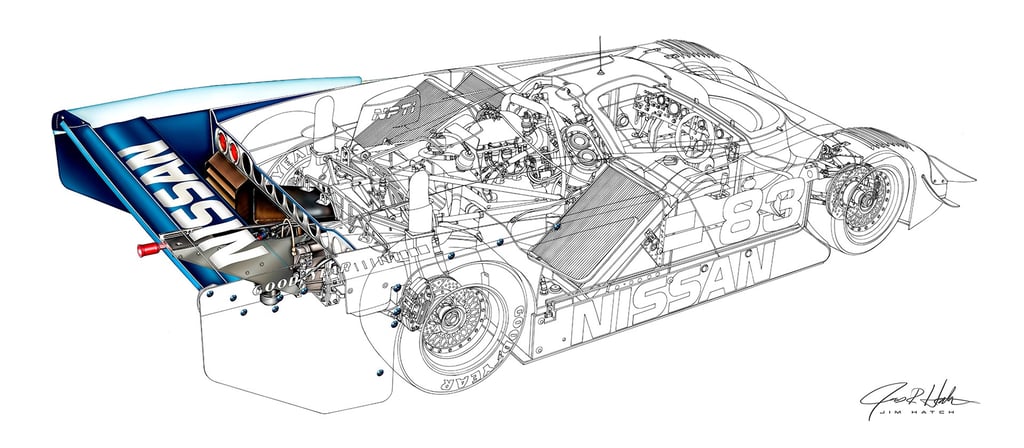
IMSA Nissan GTP © Jim Hatch
Torqart: What drives your passion for illustration, and are there any specific themes or sources that you draw inspiration from?
JH: Since all my work is commissioned from clients, I do have some freedom to take projects I like. As a motorcycle and bicycle enthusiast I placed priority on these assignments with cars forming my basis. As I get older, I look for good people to work with as well as companies I admire.
Torqart: What types of reference materials do you typically use, and can tell us about your creative workflow when starting a new project?
JH: Regarding reference, every client is different so I use whatever I can get my hands on. I do really enjoy working from photographs as I can see how the textures and surfaces really look. In my career I have worked from nearly every source of reference, including no reference at all. I try to submit a sketch, then go to line art, and ultimately layered color files, all created in Adobe Illustrator and Photoshop using a Wacom tablet on a Mac, all done by hand - old school.
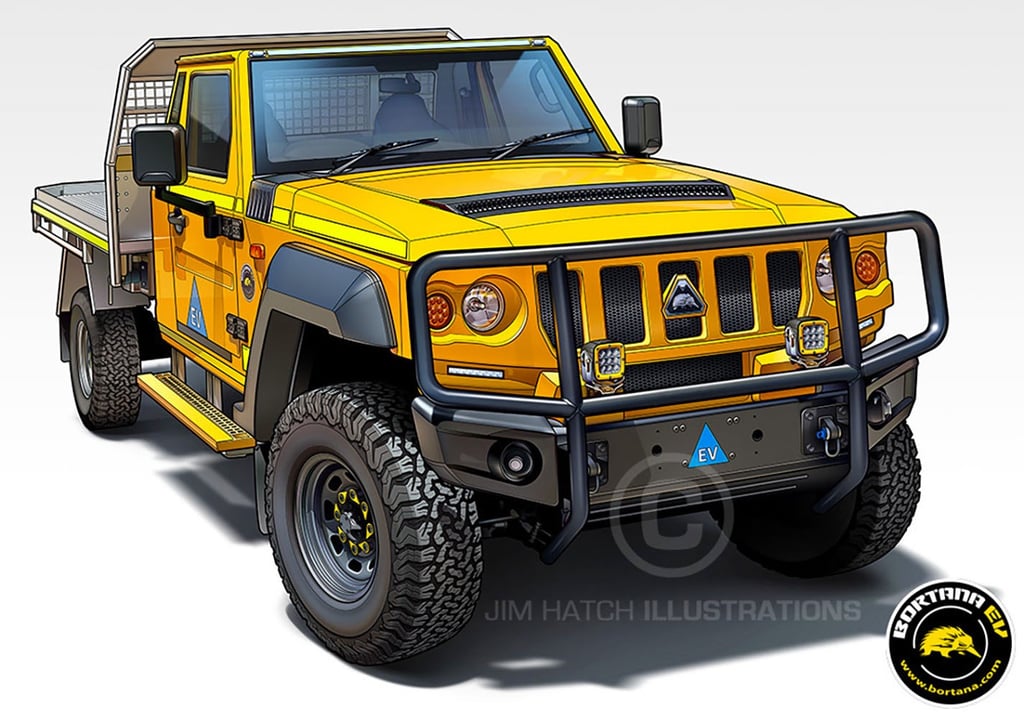
Bortana EV Truck Illustration © Jim Hatch
Torqart: Technical illustration is notoriously time-intensive – is it difficult to balance client cost/time expectations whilst striving to achieve the best possible outcome?
JH: Good question, there is no doubt a compromise made when you really want to work on something. Sometimes the budgets are there and sometimes not. I have been very fortunate to always stay busy and hopefully in the end it balances out.
Torqart: How has technology influenced your approach to your work over the years?
JH: Transitioning from hand done to computer was the biggest jump and very much welcomed. I remember air brushing at 2 am and spilling my paint or running out of air - I hated it. There was also no room for error on a board. Having your history and layers is wonderful. Being able to send a project with a link instead of a 4 foot wide Fed Ex package is magic.
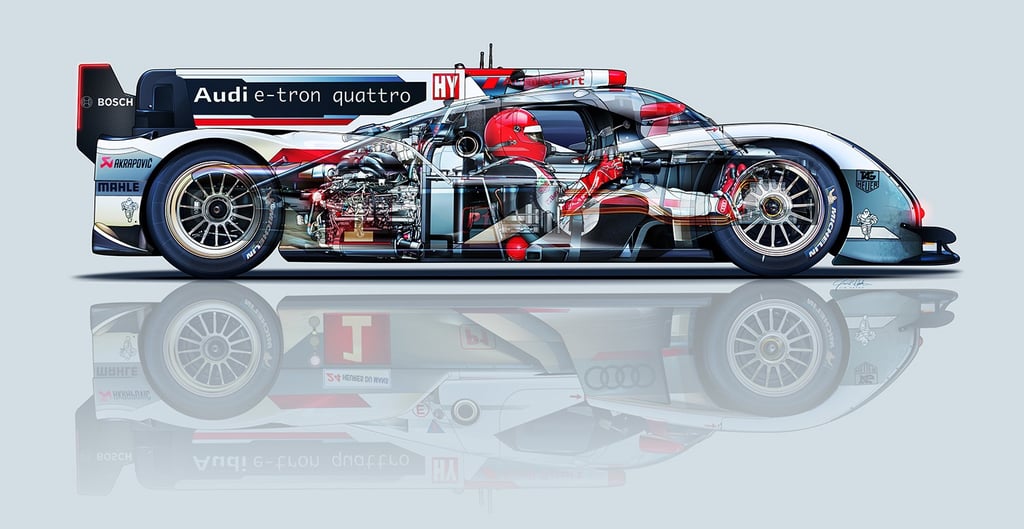
Road & Track Audi R18 Cutaway © Jim Hatch
Torqart: When creating a cutaway illustration, is it difficult to find a balance of transparency and solid form – for example, which components to highlight and which to leave out, to ensure the viewer isn't overwhelmed by mechanical density?
JH: When trying to create a balance I rely on many layers and trial and error. I am not sure what the final result will be, but I know what I like and play around until I hit on it. We all seem to know instinctually what looks good, so I try to find that balance.
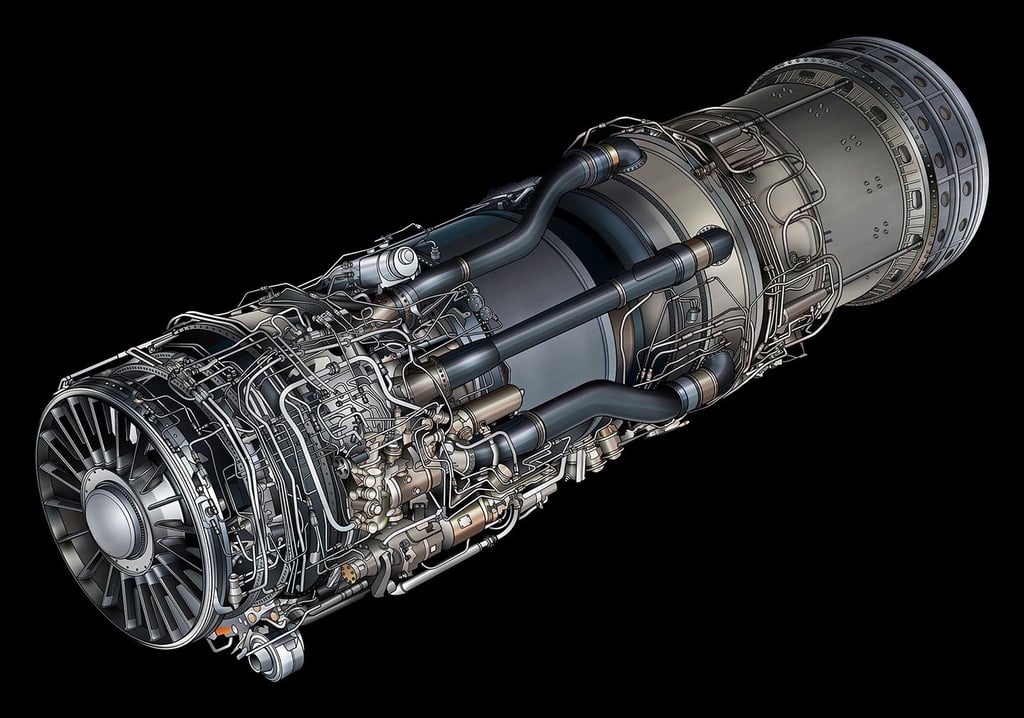
Lockheed SR-71 Blackbird Engine Cutaway © Jim Hatch
Torqart: You’ve worked with some of the world’s most iconic brands – do they generally find you through reputation, recommendations, online presence etc, or does client building/business development play an active role your day-to-day agenda?
JH: I have been very fortunate that all my work has come from word of mouth, referral or people just discovering me. It seems one thing leads to another. Many of the good people I have worked with move around in the industry and take me along. I try to maintain my website and post a bit on Instagram and LinkedIn, but that is it.
Torqart: Tell us about a some of your favourite projects, and what made them special or challenging?
JH: As mentioned earlier I have a fondness for the early Nissan GTP drawing. To non-art people I am known for the In-N-Out Burger shirts.
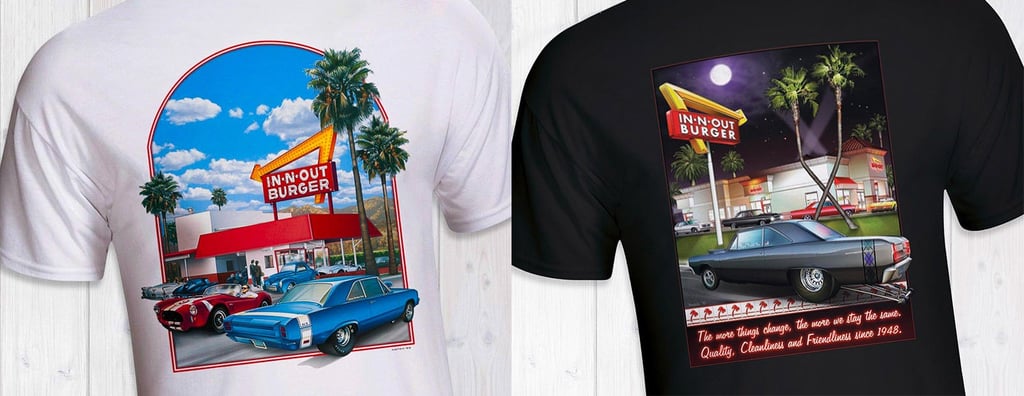
IN-N-OUT Burger T-Shirt Art © Jim Hatch
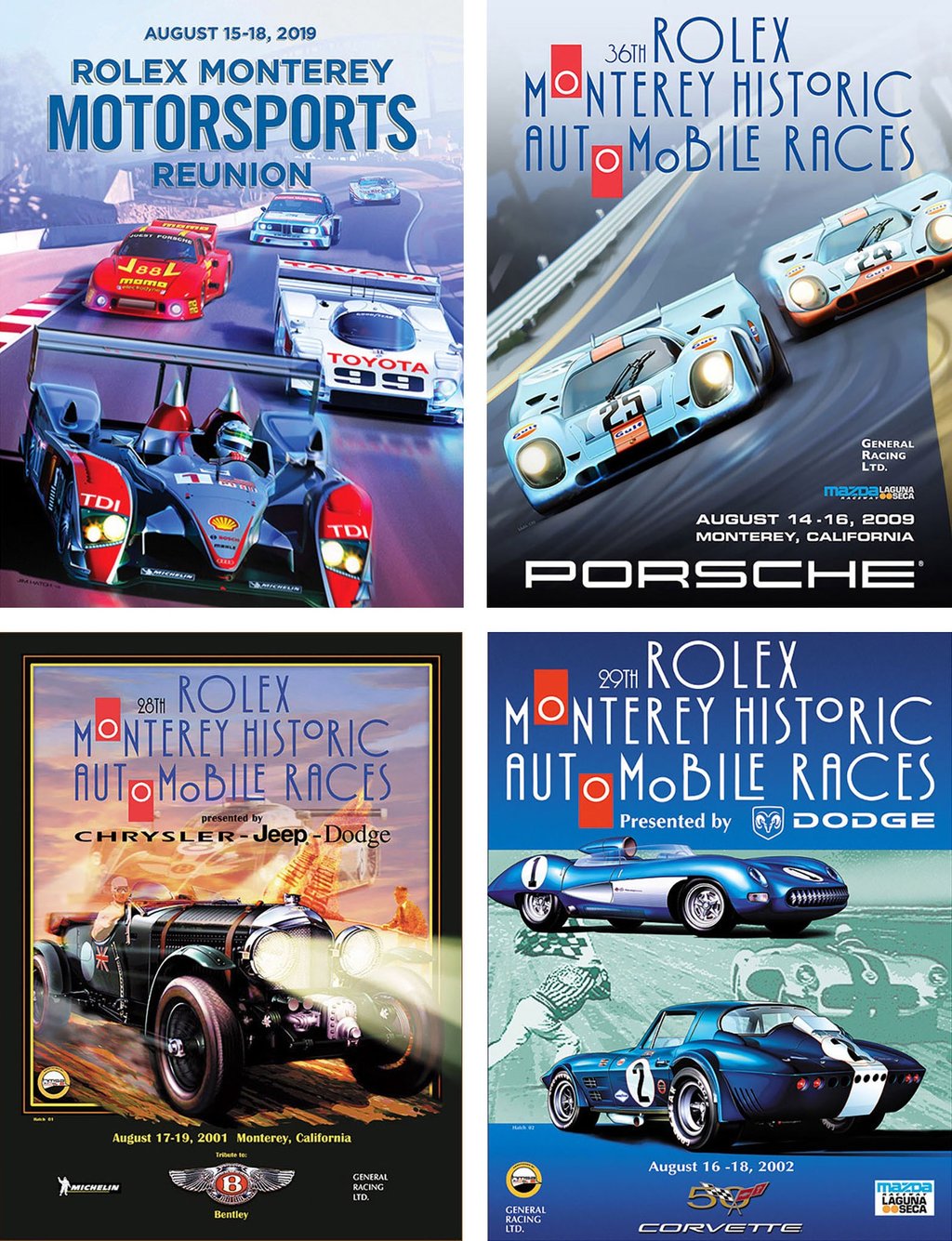
JH: I am proud of the 5 posters I did for the Monterey Historic Races. To be a part of the resurgence of Road & Track is an Honor. I have been with ICON and Specialized for over a decade. I am so thankful for all my clients - each day brings something new and fun.
Rolex Monterey Motorsports Reunion Poster Art © Jim Hatch
Torqart: For young designers who love the "old school" look of technical illustration, what advice would you offer them, and what are some fundamentals that they should focus on to stand out?
JH: It seems there is a strong demand for vector work. Creating a solid line art base is a good start to creating full color technical illustration, but also a path to making a living. From there just not being afraid to experiment with color layers and even copying art they admire as a learning exercise. It seems the most successful people have a style that emerges organically - a young person needs to find theirs through hard work.
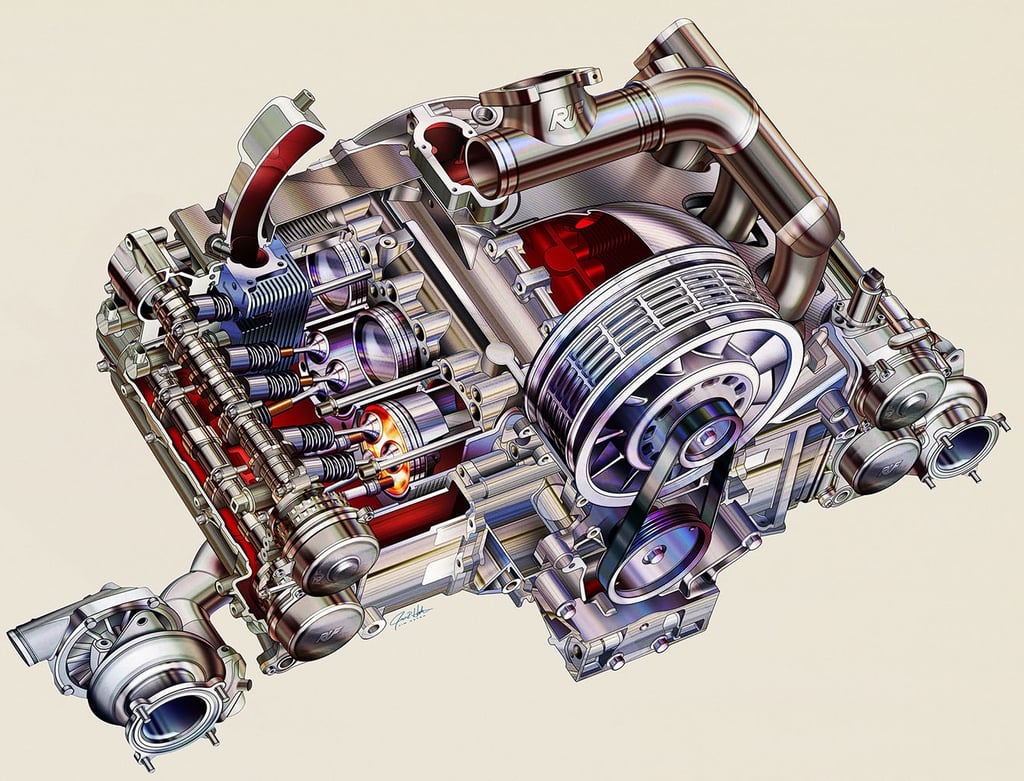
Road & Track RUF Porsche Engine Cutaway © Jim Hatch
Torqart: Where does technical illustration stand today, as opposed to 3D photorealistic rendering – and what can an illustration communicate that a 3D CAD render simply can’t compete with?
JH: Years ago, with the emergence of 3D I wasn’t sure there would be demand for 2D technical illustration. As far as I can tell, people come looking for technical accuracy with a hand-done human feeling laced in the art. We are a niche now as opposed to “the only game in town” back when I started with Kevin.
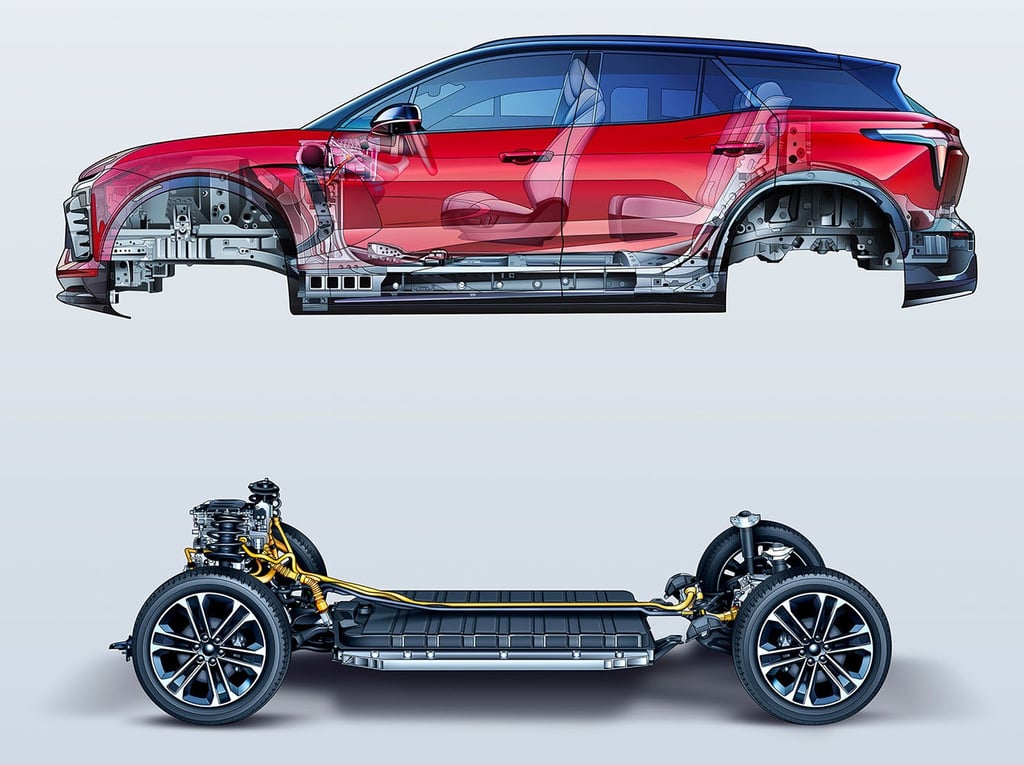
Car & Driver EV Cutaway © Jim Hatch
Torqart: How do you stay updated with the latest industry developments and innovations, and are you experiencing (or foreseeing) any trends that might impact your particular niche?
JH: I don’t pay too much attention to our ever-changing world but do keep in touch with a group of fellow Illustrator friends and we discuss what is going on. My hope is now that everything is artificial there will be a space for things created by an actual human hand.
Torqart: What has been the most rewarding aspect of your career?
JH: The most rewarding aspect of my career is I get to live out my childhood dream and spend my days working on things that excite me. The best feeling is being in the zone listening to music creating something that fills the space in my creative soul.
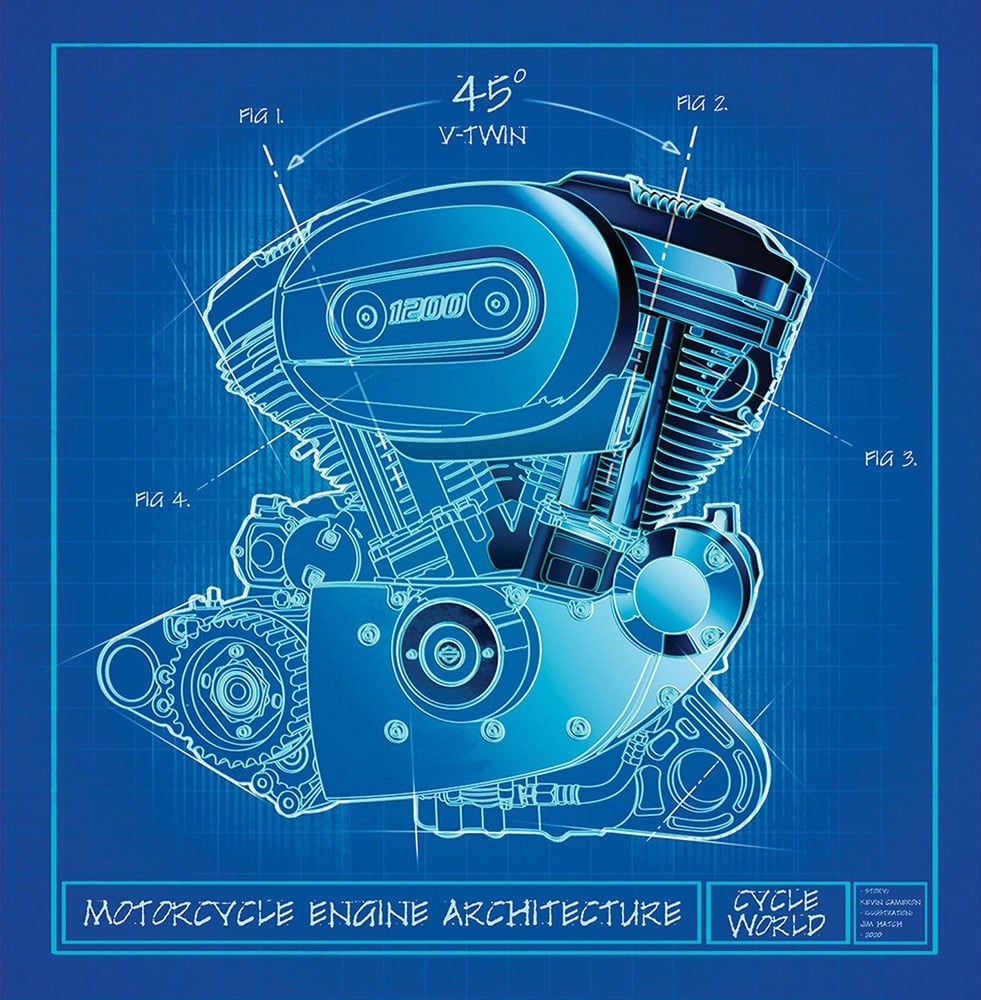
Cycle World Magazine Illustration © Jim Hatch
Torqart: Is there a specific vehicle (past or present) that you haven’t had the chance to "cut open" yet but is at the top of your bucket list?
JH: I would love to draw some older F1 cars such as the Lotus 49. I do hope my future has a few more good surprises in it before it’s all over.
Torqart: A huge thank you to Jim Hatch for sharing his story and his process with us. You can see more of Jim’s incredible portfolio at https://hatchillustrations.com
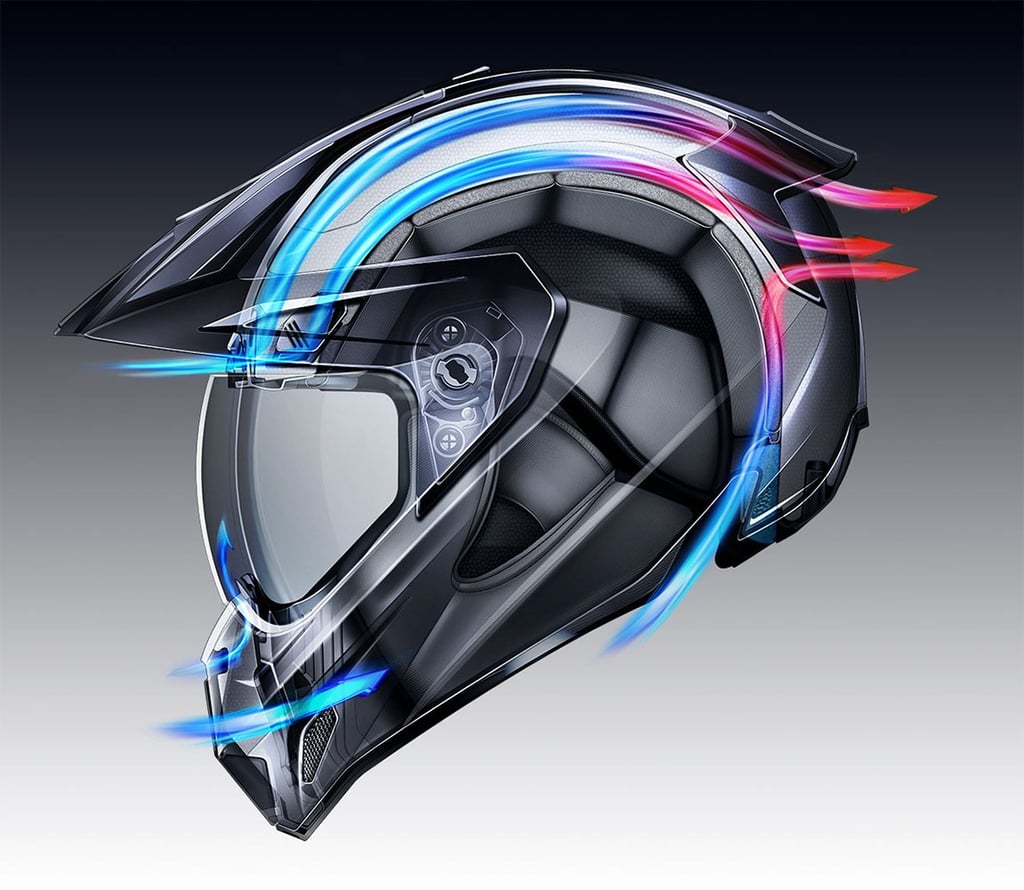
ICON Variant Pro Helmet Illustration © Jim Hatch