Redefining the ‘Neo-Rod’: The Art of Custom Car Styling with Alberto Hernandez Mendoza
Alberto is a pivotal voice in the Californian hot rod and custom car scene, reimagining classic automotive styling of the past into his own exciting creations. His work at the legendary Moal Coachbuilding has seen him tackle one-off, scratch-made creations that build on the era of the ‘Gentleman’s Car’ while maintaining a bold stance that is undeniably modern. With an ‘America’s Most Beautiful Roadster’ (AMBR) award to his name, Alberto has earned the respect of hot rod purists while simultaneously pushing the boundaries of what a custom vehicle can be. In this TorqArt exclusive, we’ll dig into Alberto’s creative process to find out what it takes to design a truly “timeless” one-off bespoke vehicle.
FEATUREDCONCEPT DESIGNCUSTOM CARS
TorqArt
5/10/202620 min read
TorqArt: As a self-described ‘Automotive Architect’ you have a very distinct footprint in the world of custom vehicle design. What convinced you that retro-inspired bespoke design was your calling rather than modern industrial design?
AHM: I have been convinced for a long time that something happened in the '60s—just before the concept of the super car was born, which led to the hibernation of the ‘evolution’ of the ‘Gentleman’s Car’ —the bespoke, unique, tailored, exclusive, elegant, exquisite,yet powerful car, with qualities out of the ordinary.
I was fortunate enough to have good friends in the Hot-Rod world, which provided me an avenue to research and explore unique ideas—always curious about what could be the next platform for a hot-rod, (other than a '32 Ford).
As you see these days, Porsche has provided a broad blank canvas for these studies, Alfa Romeo is there with very interesting propositions, and Lancia is in the playing field too. Exotic materials and engineering applications are easily accessible, so you could say the sky is the limit.
However, while all this is brewing, the unique styling, daring engineering, and radical concepts (of old) that really pushed the envelope have not yet reappeared, so, re-incorporating the old-world craftsmanship, handmade one-offs, the use of old ‘exotic’ materials (aluminium, magnesium, titanium, wood, etc) all combined with up to date engineering, is in essence, the niche where I wanted to be, and live for as long as I could.
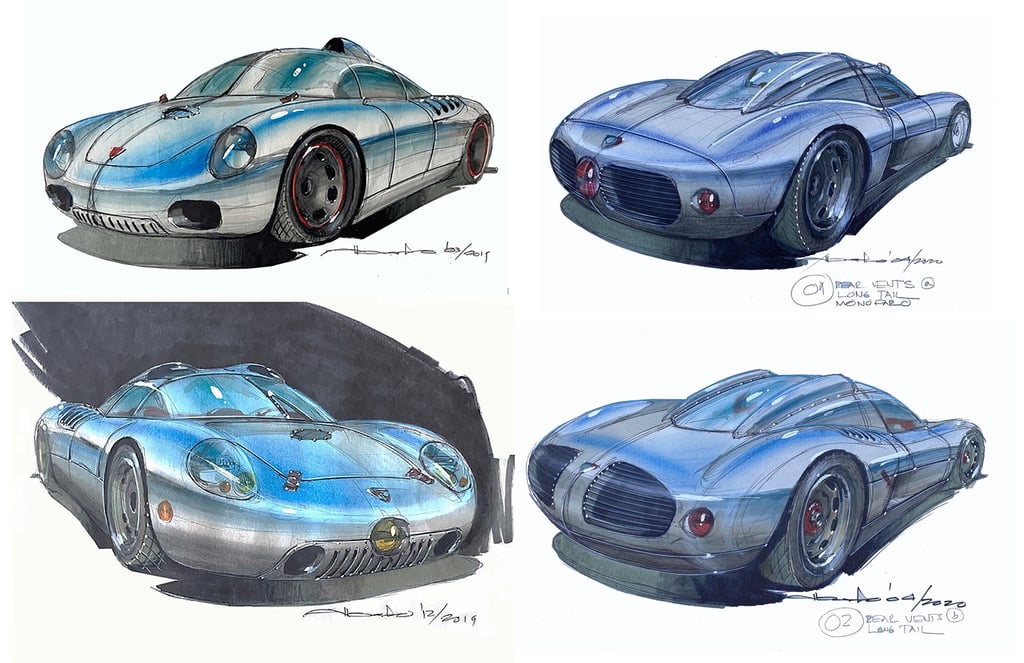
TorqArt: I remember the first time I saw your concept work, I thought “this is it!” …your work encapsulates everything that I love about retro-inspired vehicle design, beautifully capturing the Streamline Moderne and Art deco Movements, yet with a more modern and more powerful stance. Can you tell us what it is about the ‘golden age’ of bespoke car building that inspires you and influences your approach to design?
AHM: After initially working in the corporate world (immersed in concept and R&D project cars), I entered the next phase of my journey during which I was lucky enough to, among other projects, work with two of the most relevant and influential Hot Rod builders in California (So Cal Speed Shop, and Steve Moal Coachbuilders).
To satisfy their demands I needed to find relevant identifiable influences strong enough to help me create their future vehicles. At the same time, I needed to create a recognizable style of my own, with the intention that both brands (or any others using my services) would feel that connecting their projects to my name would ultimately add value to the final product, consequently making my participation in future projects desirable.
These two very important influences worked as follows…
In the case of So-Cal speed shop, the foundation to create their style was in principle the ‘land speed racing’ theme. Additionally, very traditionally perceived elements permeating from old school hot rods (that were created right after the war), as well as Indy racing (Halibrand wheels, high performance equipment, Iskenderian, etc), including of course phenomenal fabrication skills combined with exquisite fit and finish.
Regarding Moal coachworks, Steve Moal always used a descriptive concept that defines the era in which his vehicles could have been conceived, which he called the ‘Victorian Futuristic’ era, (extracted from a story told by Jules Verne).
One of his most important patrons loved the Steam-Punk concept, so when working on his projects we needed to keep this in mind.
Steve was always a big fan of ‘30s and ‘40s sports and race cars styling and construction (Superleggera, etc) so he used images from that era to convey his ideas, which I could then incorporate into his vehicles, which I also interpreted in my own way.
I’ve been a serious admirer of cars from all eras, but especially all types of sports and race cars from the beginning of the automobile until the mid to late ‘60s. I think that the above mentioned collaborations, plus all the little unique intricacies that I found during the execution of this work, and many other projects that were happening at the same time, resulted in providing unique opportunities and a wealth of ideas, leading into forming my design idiosyncrasy.
You could say that my design style permeates from the influences and experiences of working on all those projects, combined with my own personal interests and preferences in blending all those characteristics with modern engineering and construction methods extrapolated from the exotic cars from the mid ‘60s.
I have no problem using state of the art materials and mechanical components; however, I believe that excessive use of electronic devises to control an overpowered vehicle is detrimental of the level of enjoyment of the vehicle itself, and this approach reflects in the style of my designs.
I insist on mentioning the mid ‘60s because I see myself as taking over the opportunity to continue the trends that cars (from that era) were headed for before the birth of the ‘supercar’ and hence discovering what that car could be today. I’m a firm believer that every vehicle represents a story, and the story itself defines the vehicle.
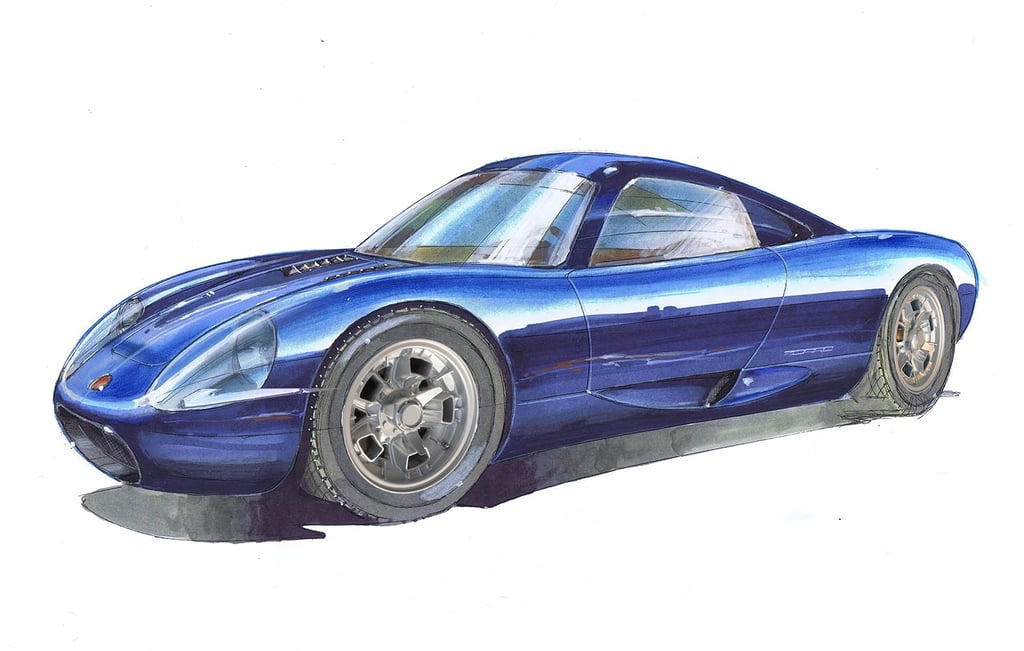
TorqArt: Your conceptual sketching skills, eye for proportions, and rendering style is exquisite. Could you walk us through your creative process when designing a bespoke vehicle from scratch?
AHM: As I mentioned before, there is a story behind every project and most likely there are some ideas in the head of the patron that would give us a starting point to begin defining a theme of a project, as well as determining the era in which the vehicle was supposed to have been conceived, built, and for what purpose, so there are some starting parameters.
Here is my process from this point onwards…
Phase 1: Typically, a project starts with a brainstorming session during which a variety of style approaches are explored, of course around the above statement, the desired components start to play a role in defining the vehicle configuration.
Phase 2: Once the options are developed, a refining process begins where the ideas can be narrowed down by selecting the elements proposed that best represent the original idea and consequently, the first realistic proposals are produced. These are in turn filtered by the patron and narrowed down so that they hopefully represent the goal of original style theme.
Phase 3: At this point a critical process starts, which consists of packaging all the mechanical components and consideration for the human engineering factors. An important element in a one-off vehicle is that the vehicle needs to look good with the driver seating in place, this is an important milestone because the scale, size and proportions of the vehicle will be validated.
An interesting point here is that a production vehicle form follows function, always leading to substantial adjustments affecting the style subtleties and proportions of the original styling propositions, whereas with a bespoke vehicle, you have to exercise your creativity to maintain the exterior looks and proportions of the car, which in a big way, is why you are building it. In my opinion, that is the difference between creating an appliance or a work of art.
Phase 4: Now we have got to the point to turn a design into a real item, and that takes you into designing and creating the necessary tools to control the fabricating, ensuring it is representative of what you created in the concept. The engineering subtleties that you use to do this are essential to producing a 3D functional representation of an idea, and if treated properly, will convey a unique work of art.
In the old days, we use to create the tooling by hand, but now we use more modern tools that help maintain the accuracy and symmetry of the final product.
The sketching skill is important throughout the process and is used to express what are you building, but also to document the entire creative process.
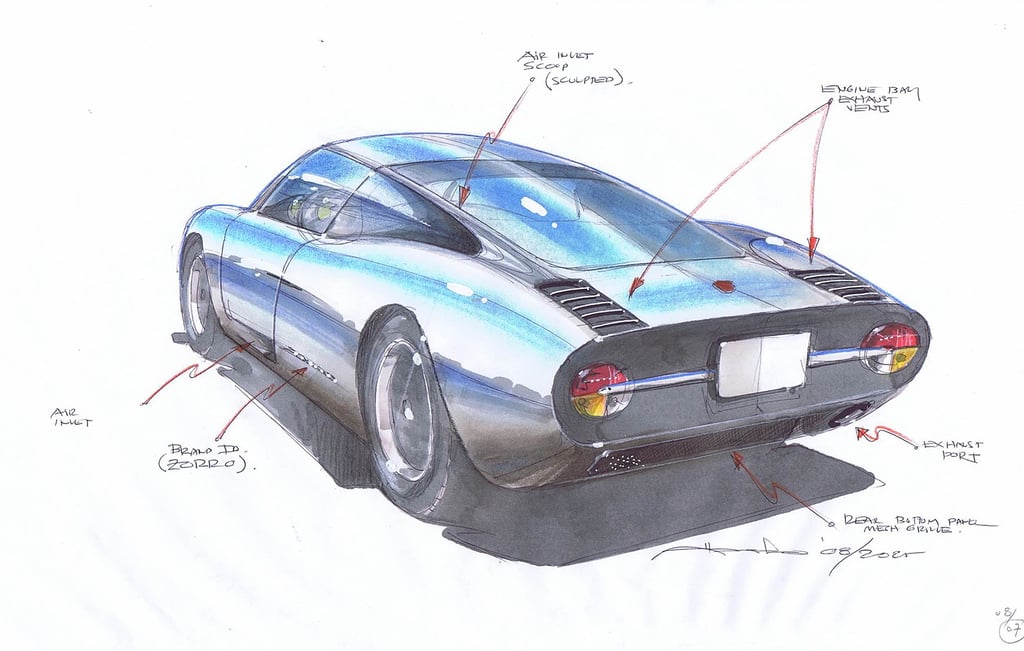
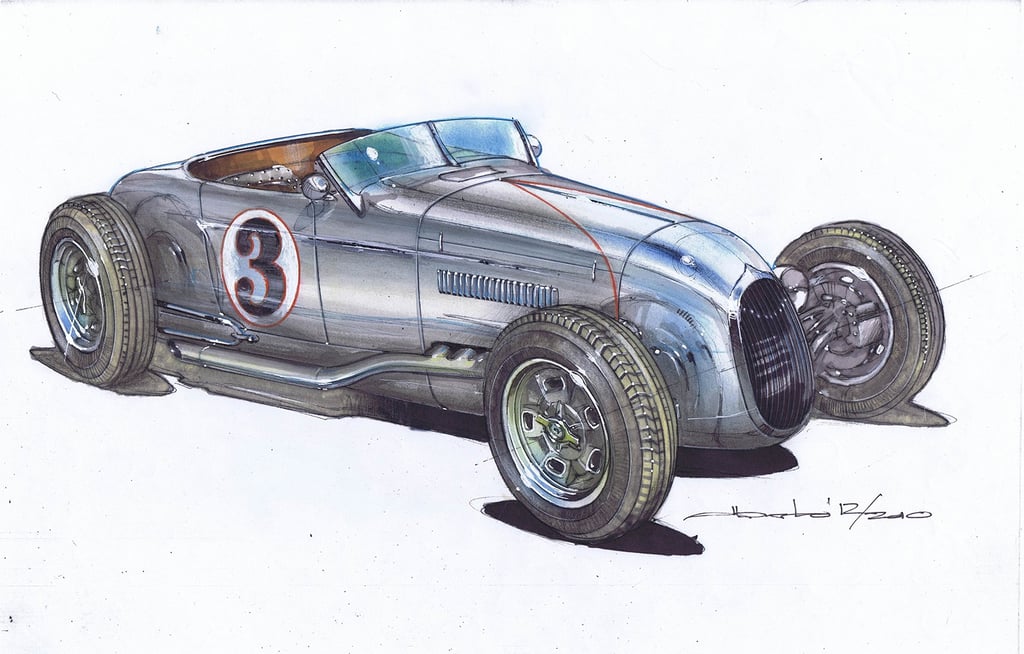
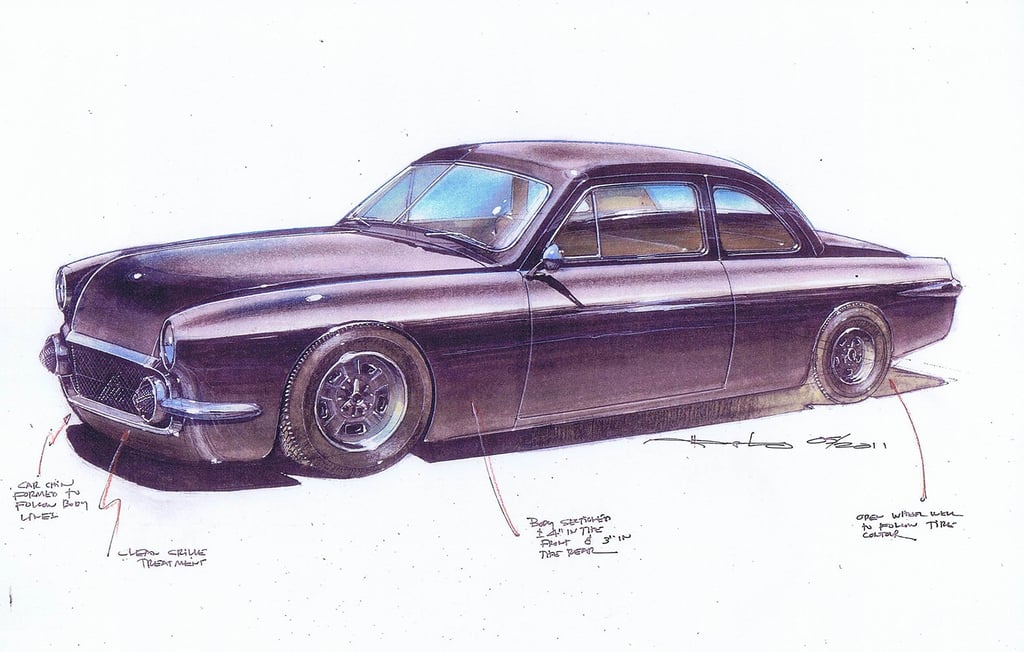
In terms of my particular sketching style, I think it is a tool that I have developed out of necessity, but given that I enjoy so much doing it, I always try to put a little bit of extra care and attention to the angles that I portray, the representation of the highlights in my opinion is essential, shadows and transparency add to the realism of the message you are conveying.
I really like old school paintings and techniques that show beautiful contrasts, and although they are not photorealistic, they add a lot of artistic value. Additionally, a one-off bespoke project deserves going the extra mile.
TorqArt: Winning the prestigious 'America’s Most Beautiful Roadster' (AMBR) award is a career-defining moment. When you’re pushing the boundaries of what a hot rod can be, what specifically are the judges looking for?
AHM: Every year they (judges) expect to see something unique in style, theme, a moment in time—historic or contemporary, who the builder is, the level of execution, the creativity, or perhaps how representative of the traditional hot rod the car is etc. This is of course always kept secret, and as you could expect, there is always some politics involved. Having said that, all you can ever do is put forward your best work and hope that your product is well received, appreciated and accepted as a contestant for the title.
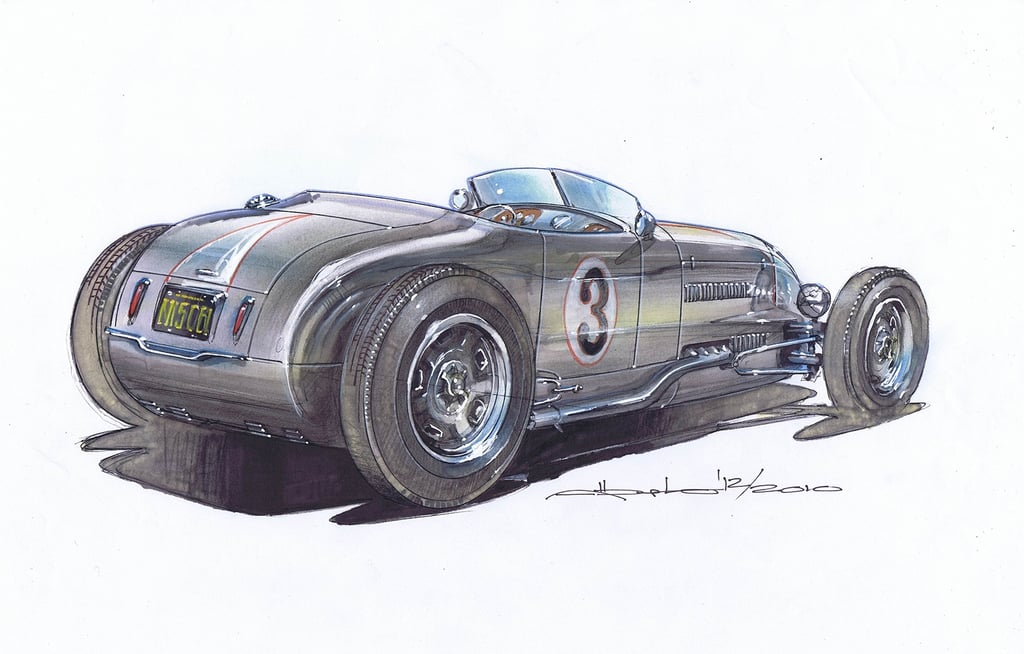
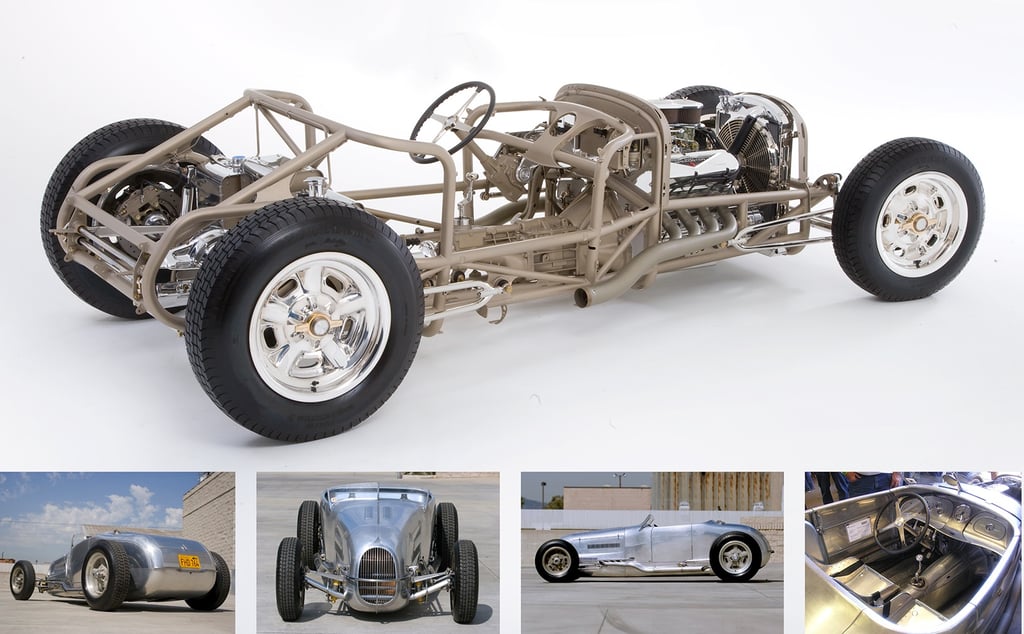
In the case of our winning car, we started with a historic project in progress, without the intention of becoming America’s Most Beautiful Roadster. The legendary race driver, engineer, and car builder Jackie Howerton started building his own personal car, and for some unknown personal reasons he lost interest and his motivation in continuing building it, so it disappeared from the public eye for a long time, until by chance, Texan Car Collector / Patron Bill Lindig found it and bought it.
He (Bill) brought the project to the So-Cal Speed Shop, commissioning them to develop a continuation story and theme to complete the car. At that time, I was hired by So-Cal to provide the necessary design and style support. We needed to get familiar with the original story of the car to understand the intentions, direction and other parameters so that we could take over from the original concept and steer it in the direction that the new owner wanted.
This was a unique car, completely hand-built, which deserved to be finished at a very high standard. The new direction was to build a fully functional vehicle with the presence of a show car.
Peter Chapouris (head of the So Cal Speed Shop) led the game plan and goals for the completion of the car—however, he was always receptive to input, ensuring that we would produce an outstanding piece of automotive art.
For example, inspiration for the theme of the seats was an ‘English classic saddle’. Instruments were to be classic analog, but they must be different from everything else, so we needed to explore fonts, face color, and contrasts. For the body finishing we explored solid colors but ultimately it was decided that (given the kind of vehicle and the original relationship of Jackie Howerton to Indianapolis), the car needed some graphics, so a simple scallop was chosen, with an unpainted portion, therefore providing an opportunity to show that the body was hand formed from aluminium.
The car was already defined in terms of silhouette and proportions, and although it is a one-off design and not based on any traditional hot rod components, it did resemble a 1927 Ford lay-out to an extent. It has a unique chromoly tubular chassis, and (although it has hot rod inspired suspension) all the components were fabricated for this specific car.
I’m very thankful that I was invited to be part of this very talented team, and I very much enjoyed the unique journey.
TorqArt: I’d like to dive into your work with Moal Coachbuilding, with appreciation for the high level of skills and dedication needed to pull off that quality of work. I mean, it’s one thing to build a faithful replica of a classic, but it’s whole other level to design and build a one-off creation from scratch. Could you tell us about the process of designing and building bespoke one-off vehicles—the thought-process and challenges you face, like balancing creativity with practical considerations such as functionality, driver ergonomics, and modern safety features etc?
AHM: I had known Steve Moal for a long time (we were introduced by Pete Chapouris of So-Cal Speed Shop Circa 1989), but I had never worked with him until 2010, when I moved to the Bay Area from Southern CA, and he very kindly offered me an office at his shop, and in addition introduced me to his patron base.
The projects that I collaborated with at Moal Coachbuilders were unique and challenging to say the least. My friend Tom Vogele (Ex-editor of street Rodder Magazine and a hard-core hot rodder) had the vision of suggesting a collaboration that could lead to creating more unique ‘out-of-the-box’ vehicles. He knew that Steve Moal (being a reputable, credible and daring person) could be willing to explore this option.
The best way to illustrate this experience is describing some of the most important projects and the characters that commissioned them, as well as the challenges that each one of them presented…
Eric Zausner Car 1:
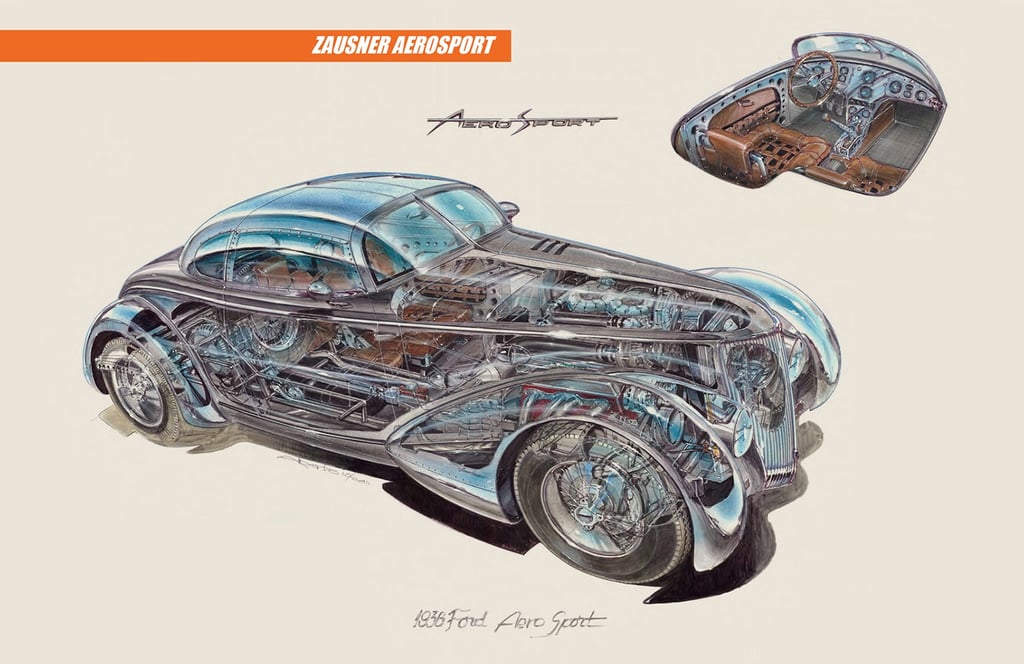
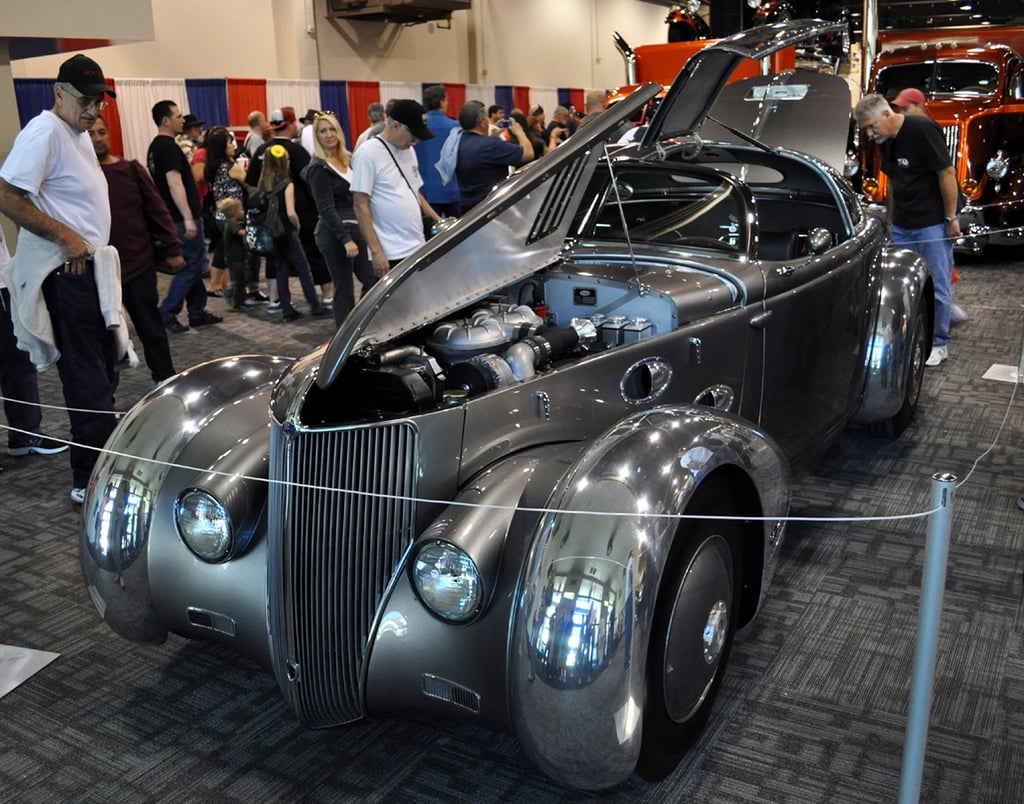
The dream behind this project was to create a car that a fighter pilot returning from WW II would build—based on a ‘36 Ford that would be heavily modified and influenced by European styling. It would be a daily driver, or weekend racer, or a land speed contender. The engine to consider was a ‘tween blower’ flat head Ford. The metal body was substantially modified, and all the fenders, hood, and roof were to be aluminium, and it would have center lock spoke wheels with streamlined covers.
Creating the ‘build’ guidelines (for the guys at the floor) required daily meetings (with my sketch pad at-hand) with Eric Zausner and Steve Moal. This car was called the ‘Aero Sport’.
Eric Zausner Car 2:
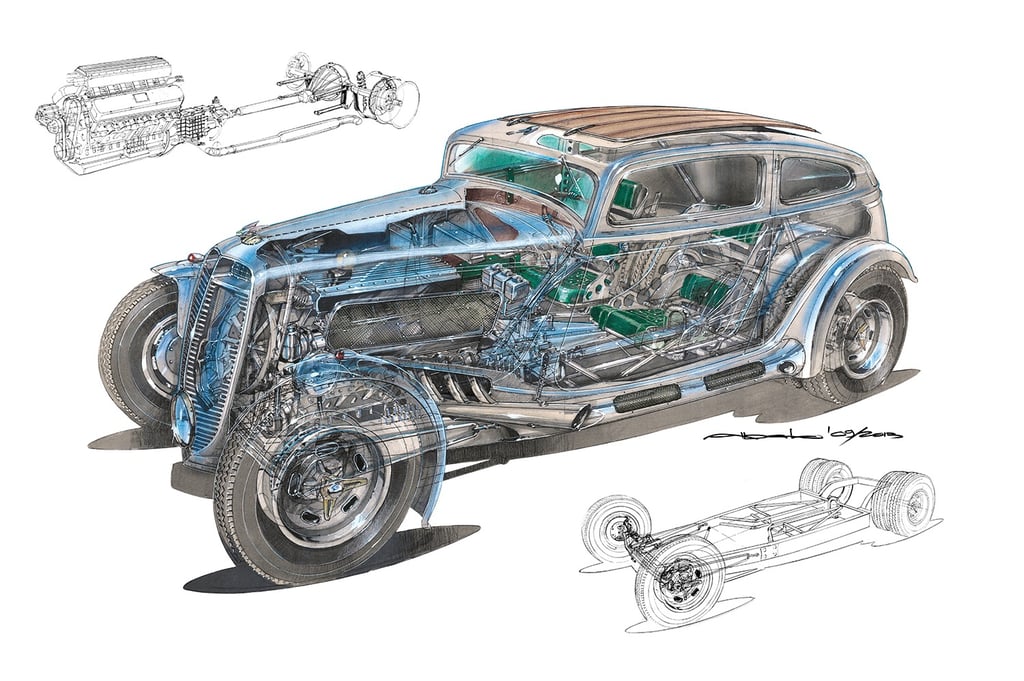
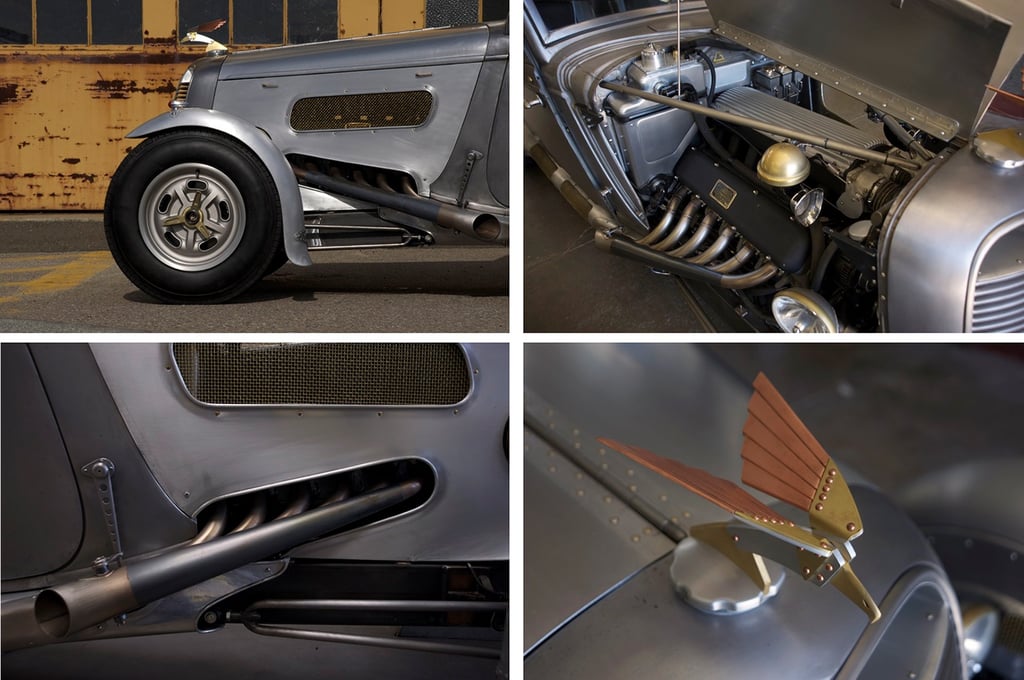
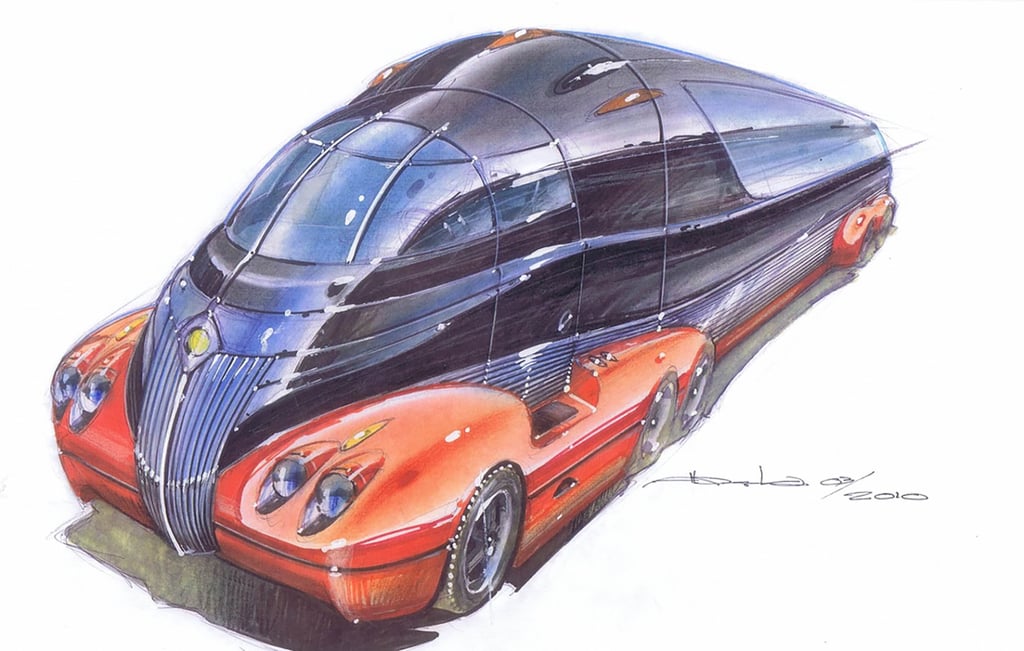
This car was influenced by the Bentley Blue Train, but of course built in America with all American components. The foundation was a ‘34 Ford Victoria cab and chassis which were heavily modified in terms of its silhouette and the functional requirements, which included dual rear tires and a fuel injected V12 Falconer engine. As per the patron instructions, the flavor of this vehicle was to be perceived as if it was born in a Steam Punk environment.
As with the previous project, we spent countless hours discussing parts, components, the style and treatments, and a very important piece of this car was the creation of a hood ornament.
The interior (seats, dashboard, instrumentation and other gadgets) needed to match the overall style of the exterior, and a particularly interesting element (that I had used on another vehicle) was retractable headlamps—when Eric Zausner saw them, he instantly said, “I want that in my car”.
Eric Zausner Car 3:
At one point Eric Zausner considered creating a mobile car museum, which would include two purpose-built big rigs transporting several (rare) classic cars, which would be displayed in front of the transporters. These rigs would not only display educational content and automotive history, but also house interactive racing simulators, destined for schools and fairs etc for a young population to enjoy.
We designed the vehicles and a presentation was created, after-which marked the end of our participation.
The Mariani Brothers car:
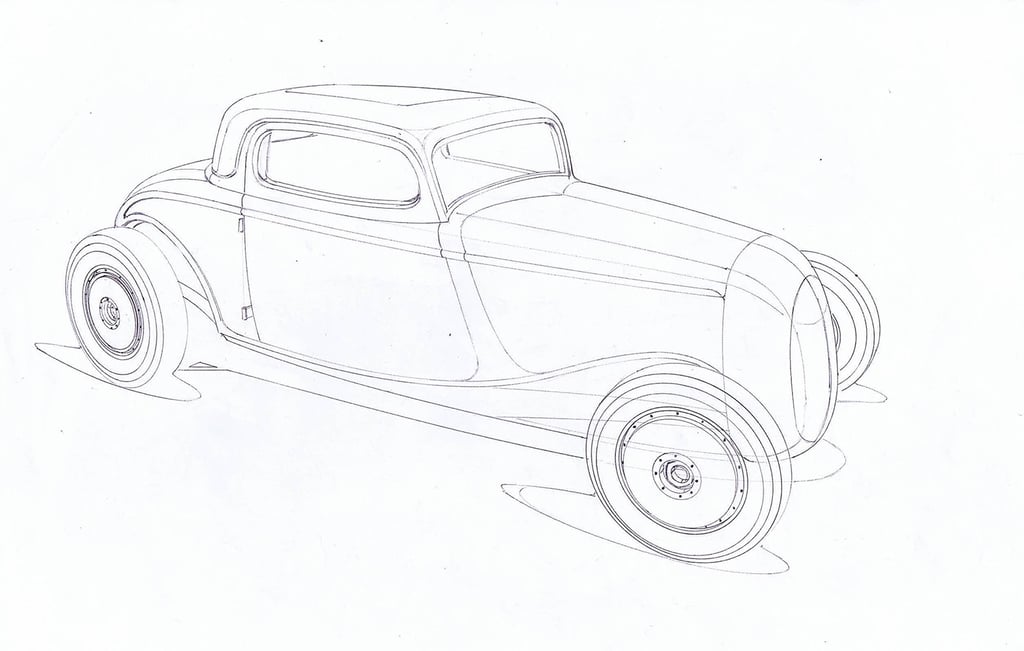
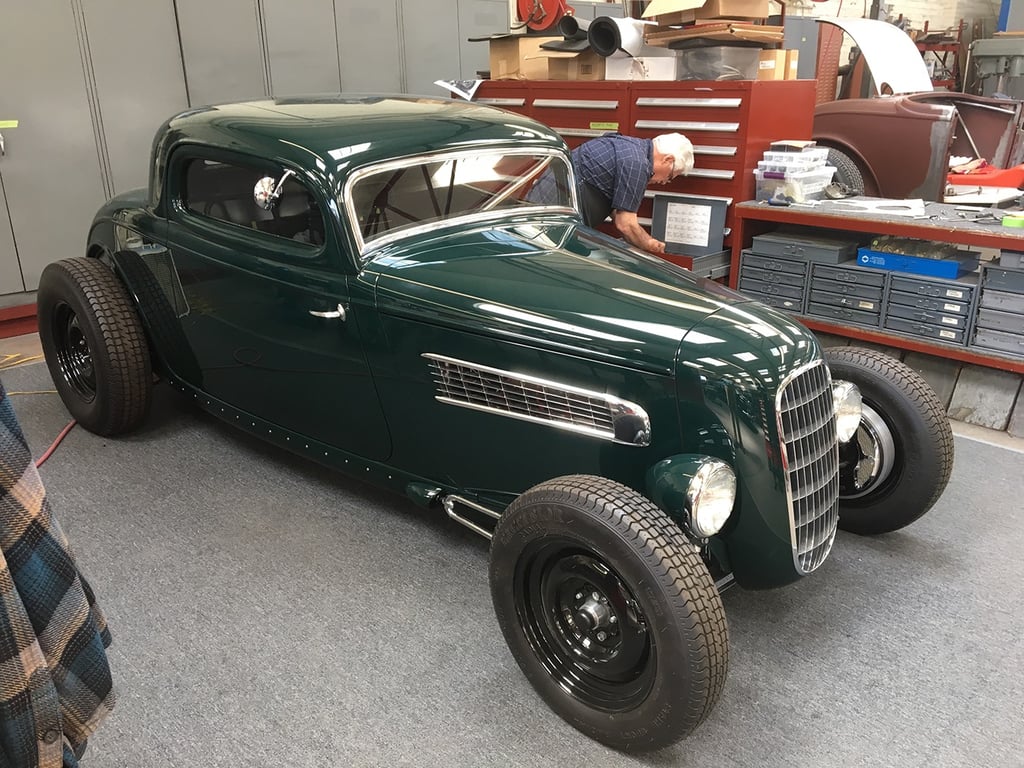
This car was based on a ’34 Ford 3-window coupe. The Mariani’s are 2nd-generation land speed racers, so this car was expected to present a streamlined design. To achieve this, we decided to create a custom made ‘track nose’ front end, and the roof was chopped a couple of inches to present a lower profile, with a smaller frontal area that would be exposed to the wind. In addition, the car was to feature a full belly pan.
The styling features included hood side vents, a nose grille, head and tail lamps, door handles, and a fuel filler cap. Some other elements were considered (sun visor, sunroof, etc), however they were ultimately rejected.
The wheels were treated with fully styled covers (Moon discs)—each one held in place with the wheel center-lock nut.
Wayne Carini car: (Celebrity and main character of the ‘Chasing Classic Cars’ TV show)
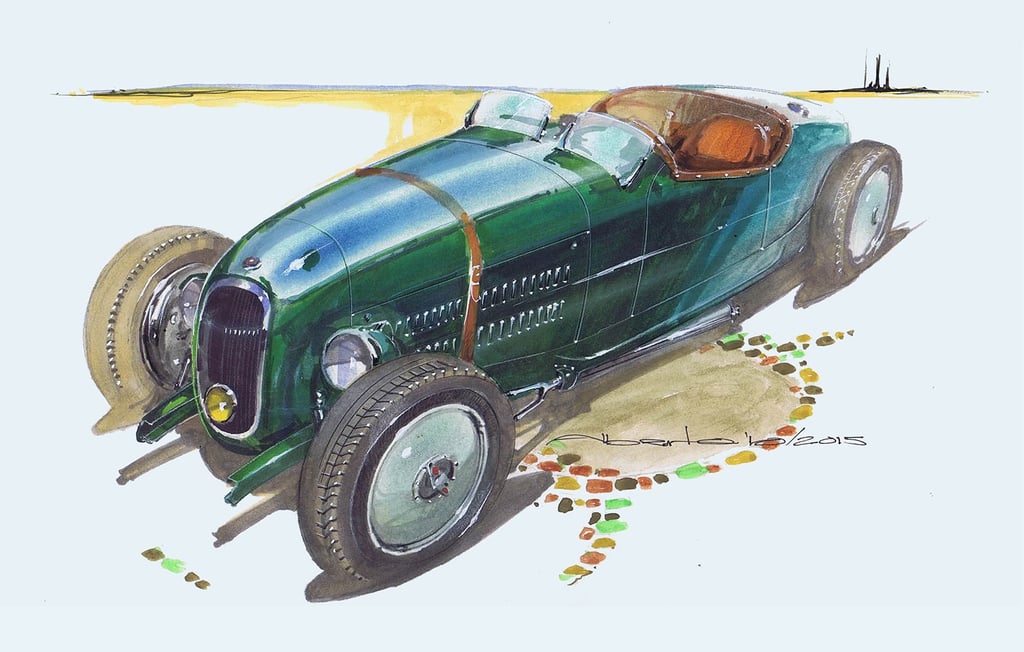
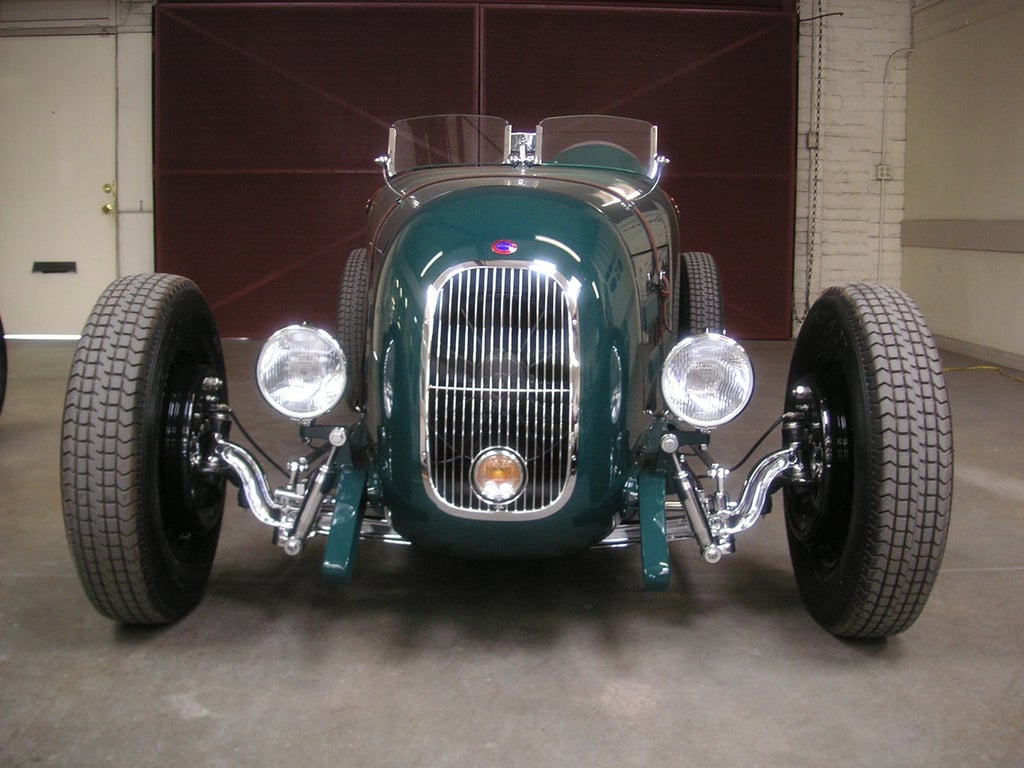
We had been working on an idea that Steve was calling the ‘Café Racer ’32’, which was a 2-seater ‘30s roadster sports car, with an ‘English hill-climb’ inspired flavor.
Wayne Carini stopped by for a visit and saw that we had some styling exploration drawings on the wall, which immediately grabbed his attention, and soon after he decided to commission a build of the car.
The car was to be built on a traditional ’32 Ford hot rod Chassis featuring a solid axle front suspension and a 4-link rear suspension. It would have disc brakes all around and would be powered by a flat head Ford engine with 3 carburettors, and it would feature a ‘track nose’, with the lay-out dependent on the flexibility of the components already specified.
As usual, this car was completely hand-made, and it featured an all-aluminium body shell.
Interestingly—during the unveiling of the car (at a private party), race car driver Danny Sullivan drove the car in and delivered it to Wayne Carini, at which point he said (on national TV), that “he and Steve had designed that car in 20 minutes”.
The 'South African' Car:
This project appeared out of the blue, and I never met the patron (who commissioned the build) until much later, but this was a very serious project.
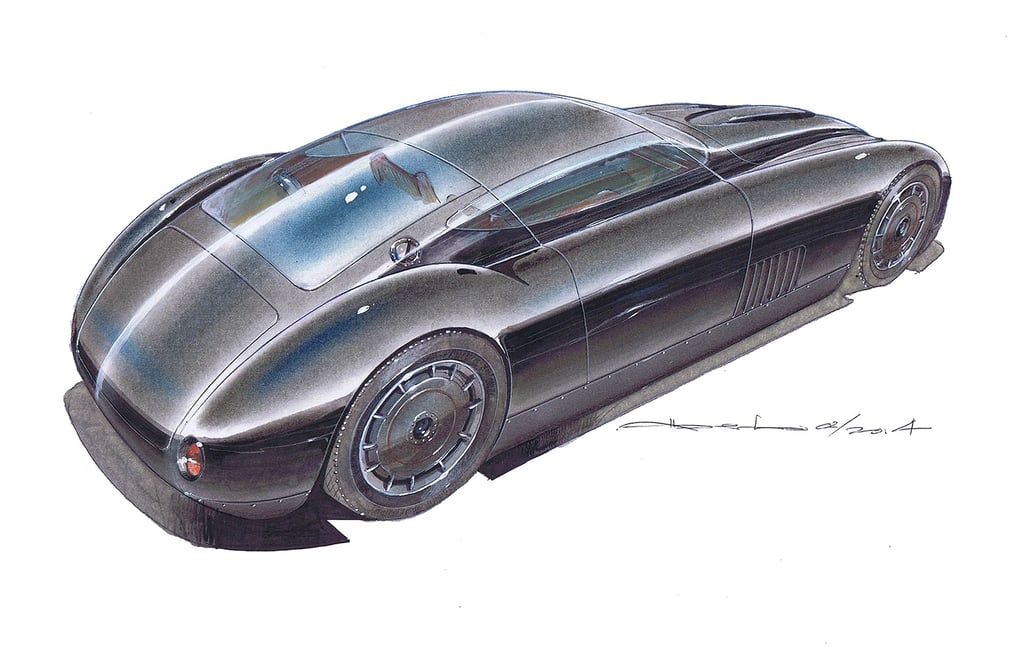
During our first conversations we established that this car would have a ‘Bentley’ presence as it was to be a ‘Gentleman’s Car’—big and luxurious (yet in a very subtle way). It was to be built on a one-off custom-designed chassis with full independent suspension all-around, and it would be heavy and powerful. It would house a V12 engine with a 6-speed gearbox, and of course, everything would be brand new.
The first thing we did was to present a vehicle lay-out proposal for patron approval. Once the basic parameters were established, we started the styling exploration, sending updates to the patron for his consideration and approval. During this process we built the chassis and ordered the engine.
The styling approval was our first critical milestone, which led to creating the body buck, which we mounted onto the chassis to ascertain the vehicle size and proportions.
The body shell for this vehicle was created in aluminium and assembled on the car by Jimmy Kilroy (Aluminium shaper extraordinaire).
We used aluminium substrates for the interior, which were covered in leather.
Interestingly— as we approached the completion of the styling, the client wanted us to explore the possibility of building a mid-engine car instead, so we did a study and proposals, but ultimately, he chose to stick with the original concept of a front-engine car.
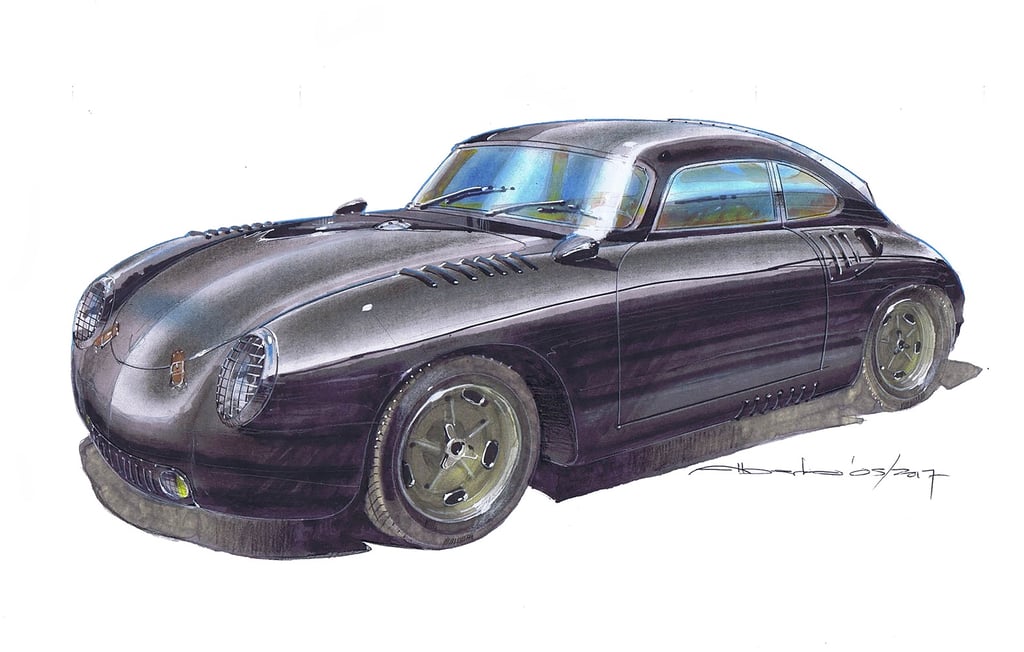
Bruce Leven: Porsche Outlaw
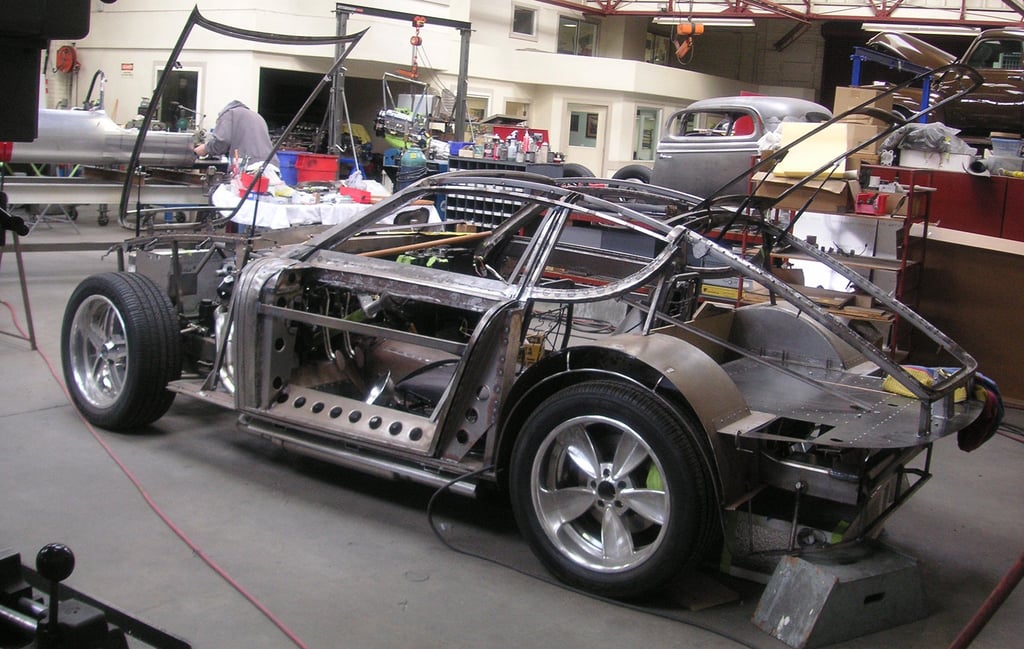
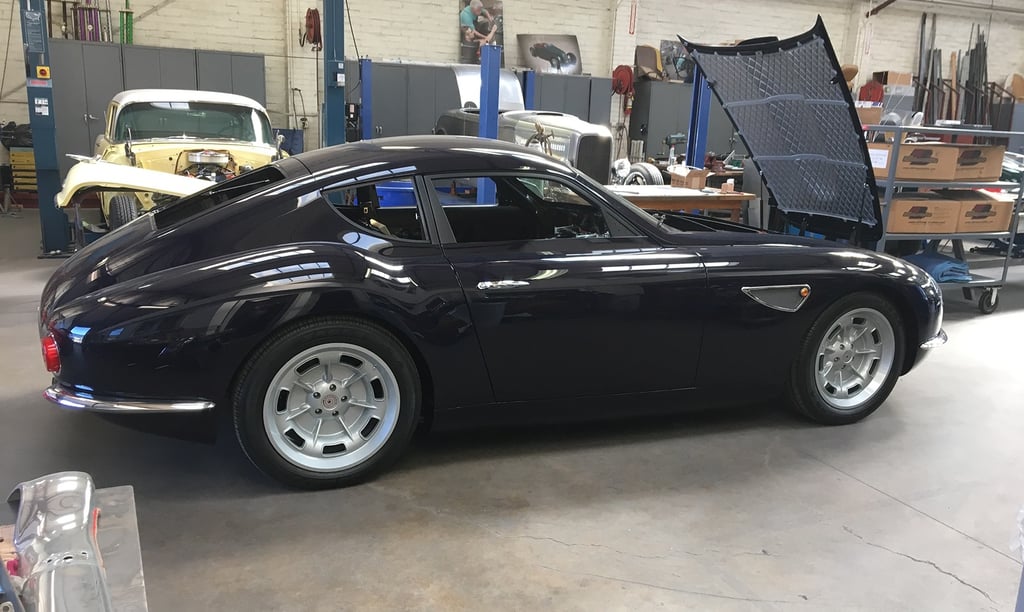
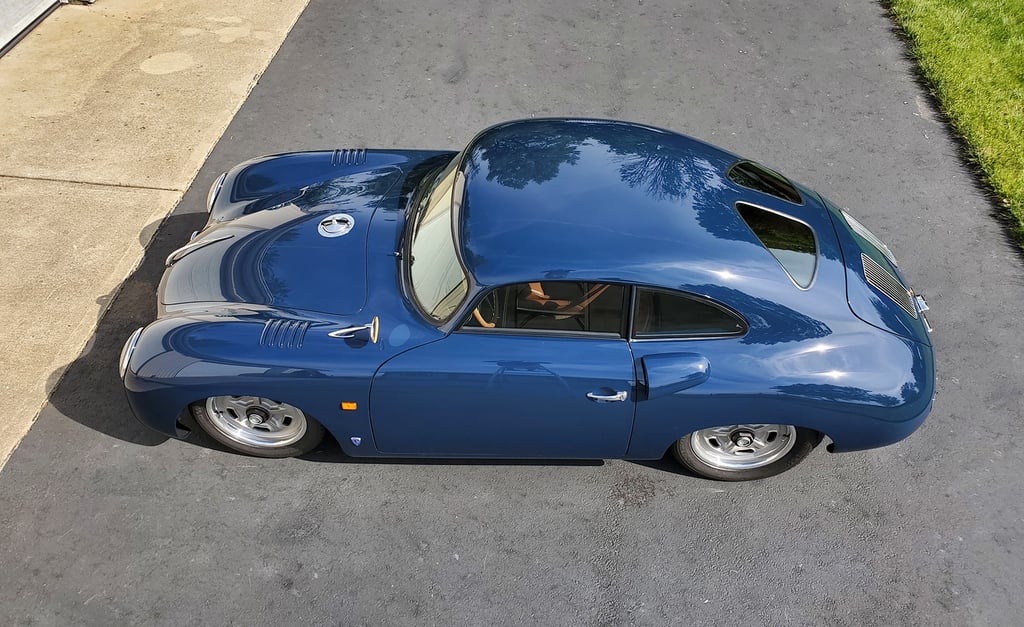
Bruce Leven is a well-known Porsche racing driver, and one day he called into Moal’s to discuss the possibility of creating a unique Porsche 356 Outlaw.
He wanted a very early version of a (split rear window) car with a two-inch top-chop, with Halibrand wheels, and exterior body treatment to make it look unique… as if the car was ‘made by Porsche’ as a race car.
Bruce commissioned the design work and production of the reinforced ‘unibody’ modified body shell at Moal’s, and his friend/mechanic (Jeff Eischen) would oversee motorizing and finishing the car.
To understand what Bruce was wanting, we explored the history of Porsche, including collaborations with Abarth, the 550 spyder (in all configurations), the RSK’s, and some land speed racing experiments.
The split rear window presented a special challenge given that the roof line was reconfigured due to chopping the top. However, before chopping the top, we had to digitize the car and explore design options so that the resulting shape was still pleasing to the eye and respected the original Porsche silhouette.
Additionally, the old-world ‘Moal approach’ required extra time and effort to very carefully create the guiding tooling to execute the project and achieve the desired shape.
Bruce Leven: Ford ’51 GT car
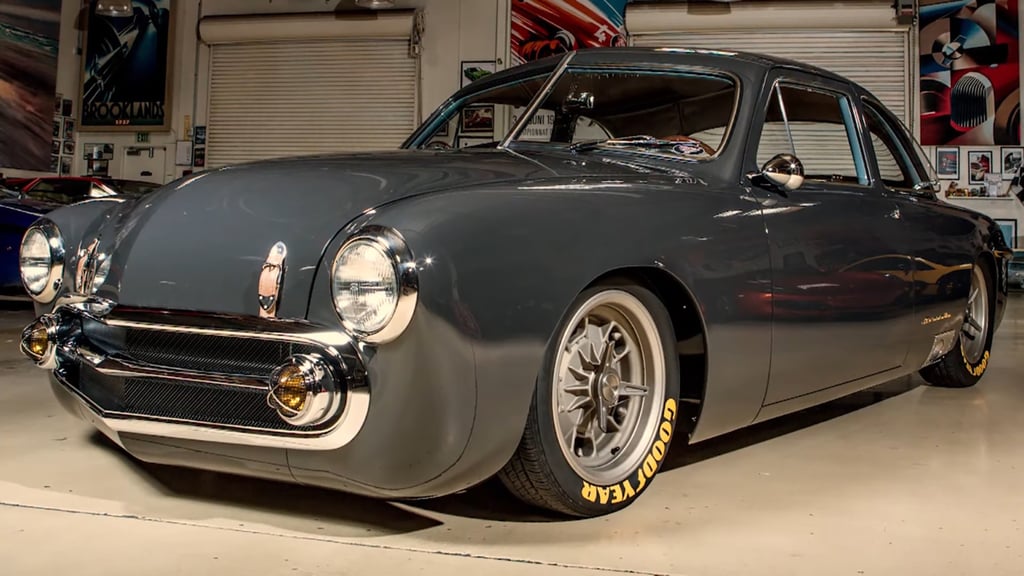
When Bruce started the conversation about this car, he had some images of a custom car that was built many years ago by ‘Valley View Customs’ in southern California. A particular feature of this project was to make the car profile more agile by sectioning the lower part, instead of chopping the top—a very interesting proposition.
This beautiful body was to be mounted on a state-of-the-art rolling chassis, designed for a serious sports car, and it would be powered the most durable and powerful engine of the time.
Finally, the car was supposed to look as though it had been built in the mid-1950s. We suggested to build a race car made to compete in Europe, and although built with premium American components, it would be designed for European road racing, so the exterior details were very carefully curated and followed most of the perceived European racing standards of the day.
The interior of this car was very unique as well—all utilitarian and functional, with special attention given to the ergonomics, considering the car could compete in endurance races.
The car was to have a full roll cage for obvious safety requirements, and although very spartan, the finishing touches were to be very rich and beautiful.
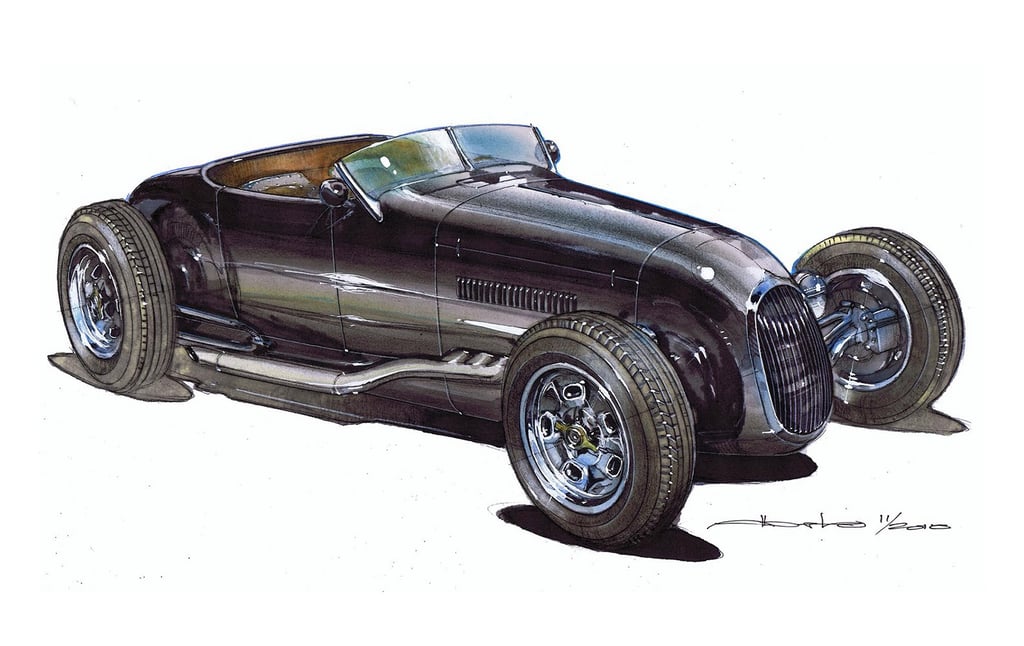
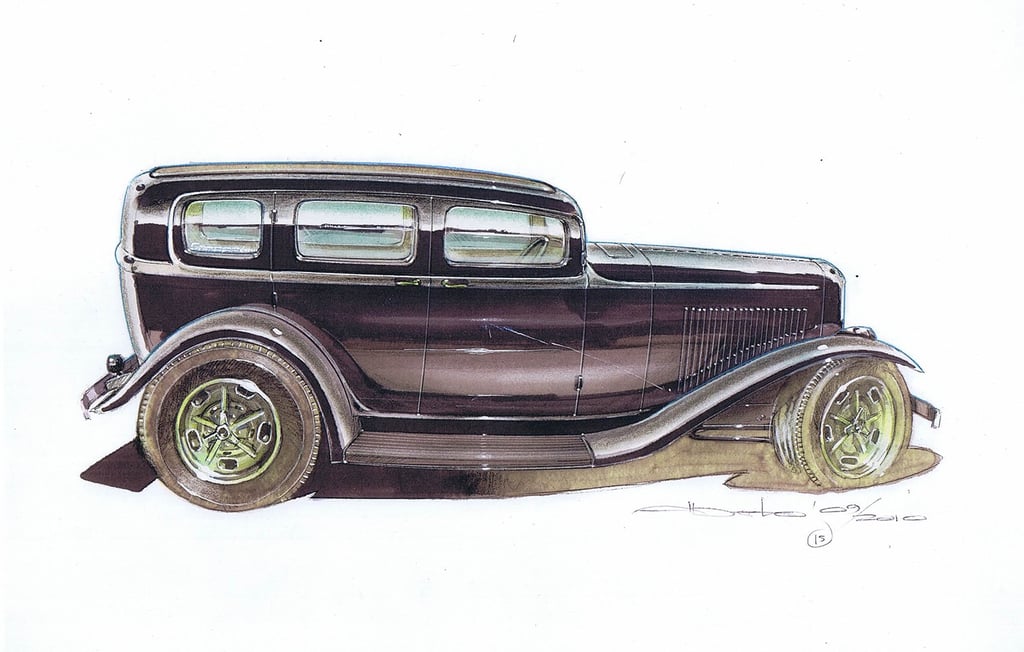
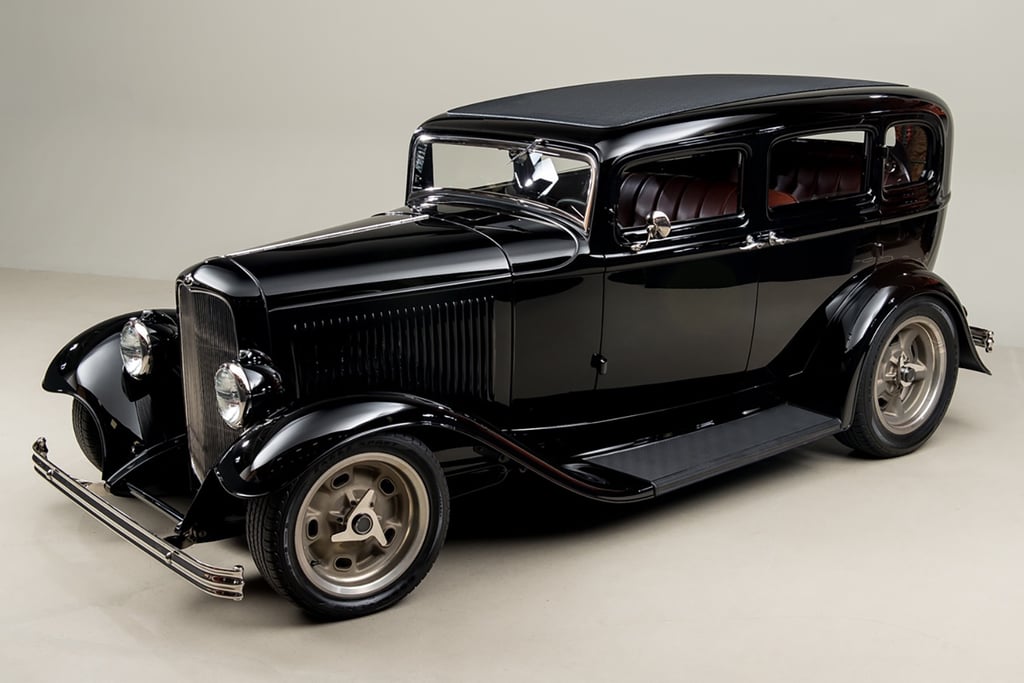
Bruce Canepa: ’32 Ford Sedan Hot Rod
This was an interesting project because Bruce Canepa has access to some very unique historic parts, and he happened to have a Gurney-Weslake Ford V8 Indy engine, so our task was to build the car around this engine.
The car was to be traditional and subtle in appearance; however, it should feature unique, delicate, and exquisite details, with the most obvious visible detail being 2.5-inch top-chop to make the car lighter and appear more aggressive. Other exterior details included real Indy magnesium Halibrand wheels and a sinister gloss black finish.
The interior was very traditional, finished in a rich cognac colored leather—more like you would expect to see in a Bentley instead a Ford. All the dashboard ornaments / finishers were one-off hand-made parts.
This car was a phenomenal conversation piece, exotic, and yet another example of beautiful automotive art by Steve Moal—fitting for a museum or a private collection.
During all my years working with Steve Moal, I enjoyed enormous creative freedom, and I was afforded the opportunity to dream. I’m extremely grateful for the opportunity, which allowed me to grow my vision for each new challenge.
Unfortunately, the Pandemic got in the way and upon re-connecting, Steve had decided to semi- retire leaving the reins of the business to his two sons who had a different vision for the future.
An important point in sharing this body of work is to provide a perspective of the (huge) amount of work required to create these one-off projects, highlighting the talent and attention to detail that makes these cars real pieces of automotive art.
TorqArt: Absolutely. They truly are masterpieces of automotive art. Can you tell us about your most recent projects?
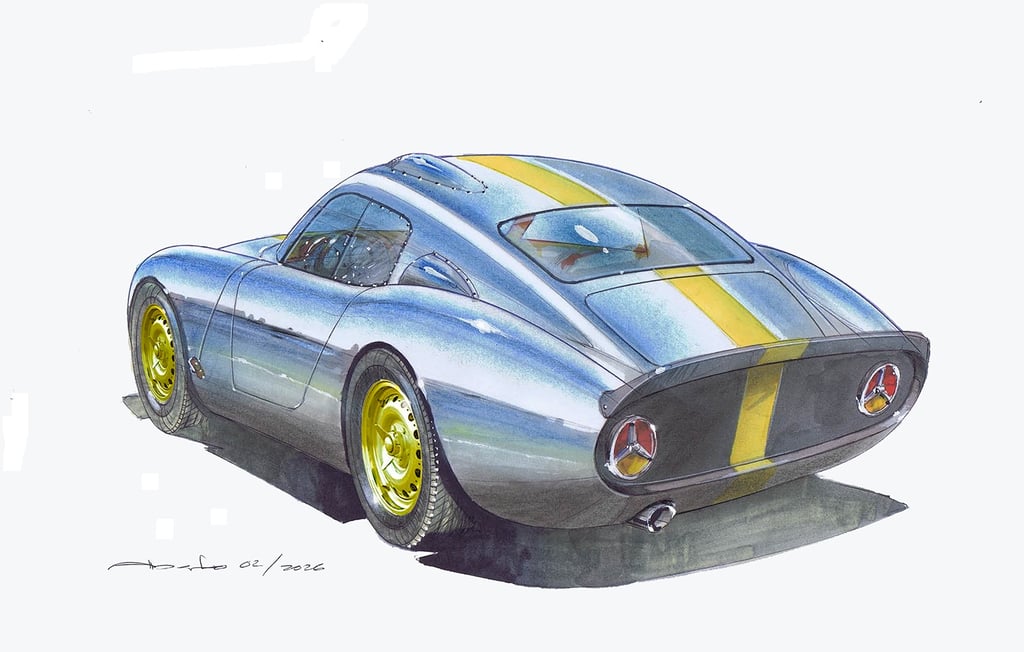
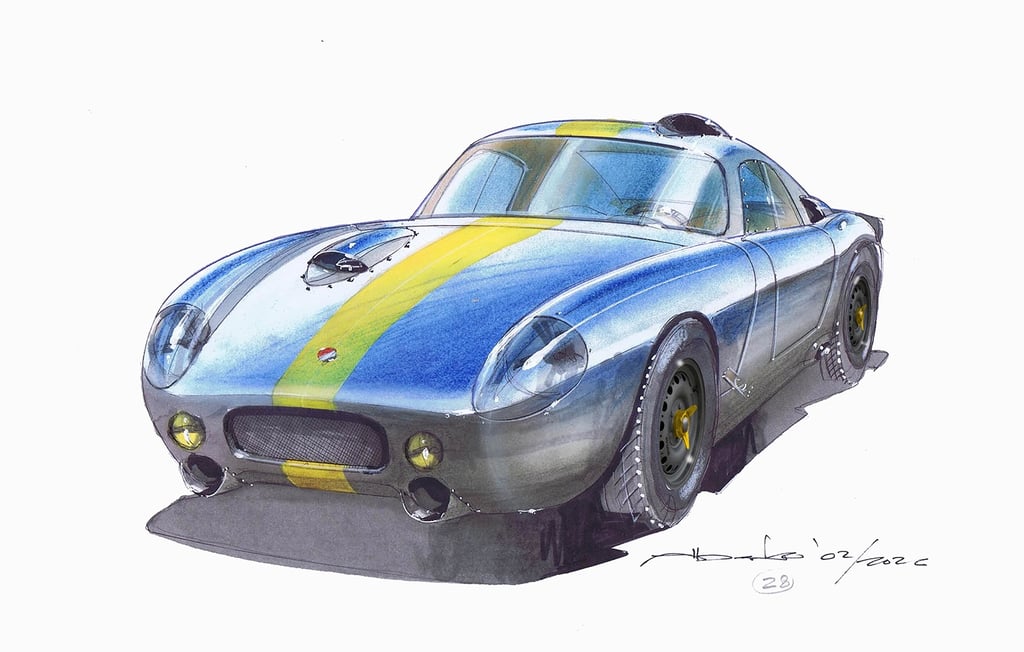
AHM: Over the last 5 years I have had the opportunity to access (and work with) a group of extremely talented craftsmen, technicians and engineers and visionaries, perhaps not as visible as the well-known Hot Rod shops, but very capable and willing to push the envelope into what you could consider the next level.
This opportunity opened the door for a different type of project, which is exquisite in terms of content, execution and finish, although as unique as the previous projects, but a little more creative in two key areas –
1: Incorporating significantly more up-to-date engineering, while keeping the vehicle in the analog world, and at a level of performance that is manageable, yet with the objective of producing a seriously fun drive for accomplished drivers.
2: Exploring the ideas, trends, and exterior styling character of the ‘Gentleman’s Car’, an era (as mentioned previously) that went into hibernation just prior to the birth of the supercar—the latter being vehicles with outrageously powerful engines and tremendously efficient aerodynamics, which can be almost impossible to drive without the support of many electronic devices.
So, these cars are not replicas of anything, they have no donor components, and they are a platform for multiple exotic (but not overly powered) drivetrains. Lastly, all these vehicles have hand-made aluminium bodies, so they are true one-off bespoke vehicles.
They do however pay homage to the creative forces of the mid ‘60s like Abarth, Bizzarini, Scaglione, Frua, Nardi, Momo, Michelotti, Fantuzzi, Scaglietti, Forghieri, etc, and many more innovators from that time, which for unknown reasons seem to have disappeared from the car world at that precise point time.
Currently we are working on 5 different programs of front and mid-engine cars powered by Porsche, Ford, Alfa Romeo / Maserati and Lotus engines, which are expected to start surfacing during the next two years.
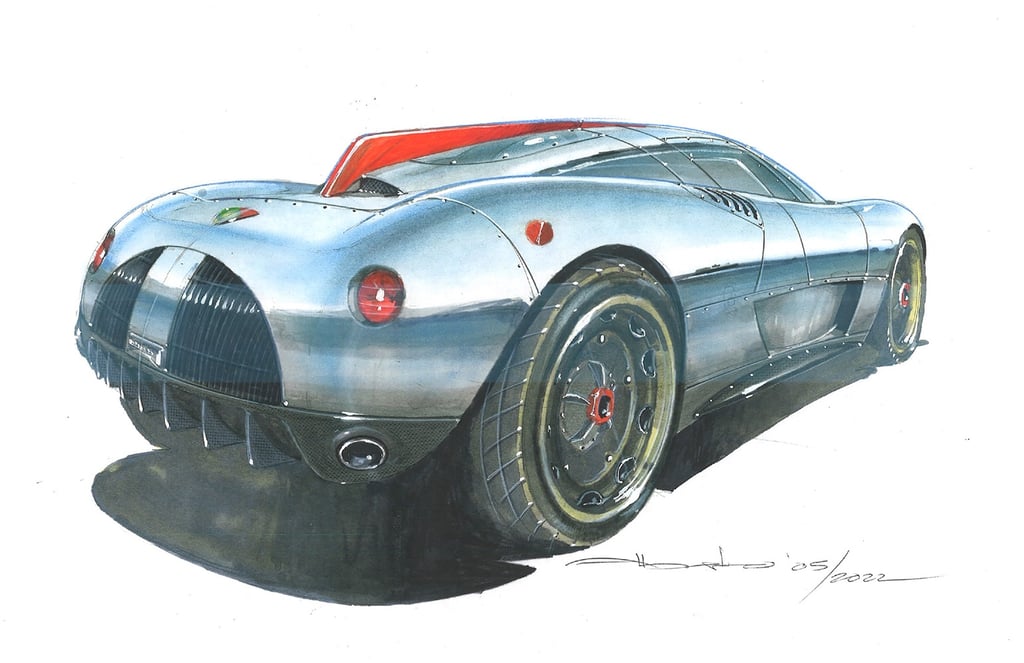
TorqArt: Those are some very cool projects! Looks like a busy schedule ahead and we’ll look forward to following your progress.
A huge thank you for your time and generosity in sharing your story and creative process with us, it’s been an absolute pleasure talking cars with you, and we wish you all the very best with your projects.
Check out Alberto’s work and social media presence under the pseudonym “blindmouse_”
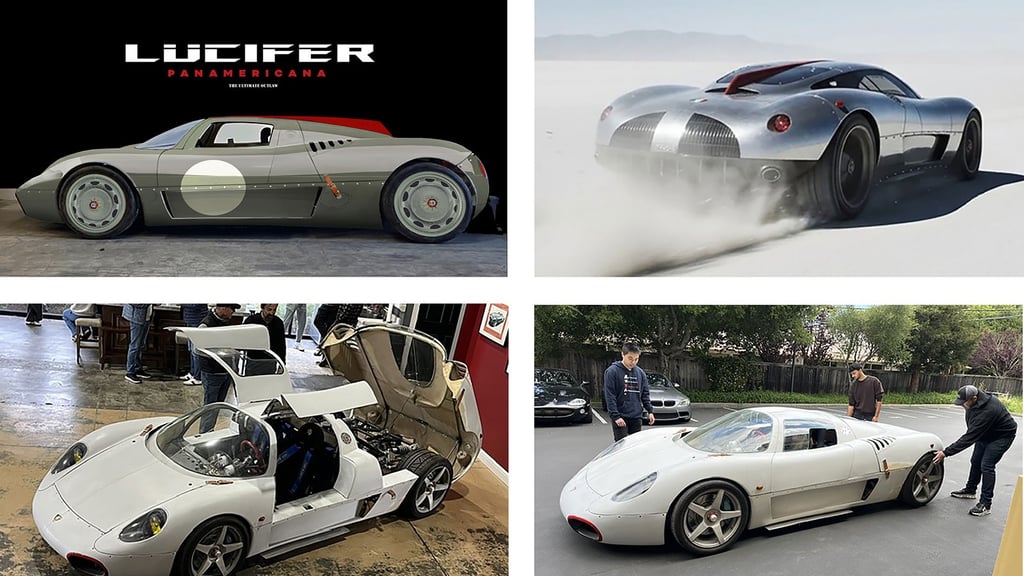
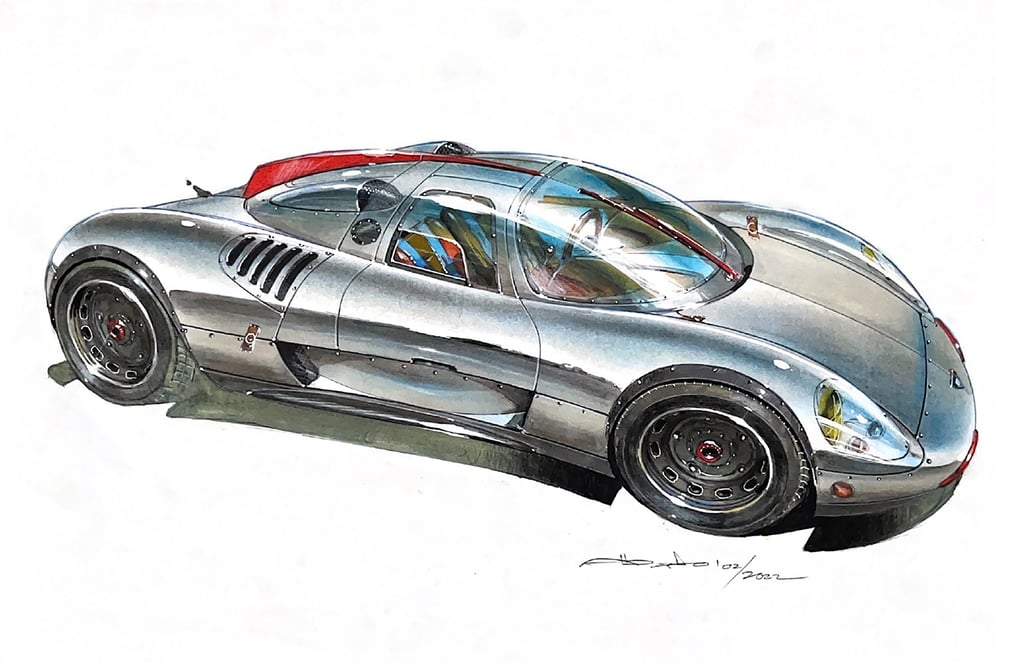
Last But Not Least... The Lucifer Project
The concept of the Lucifer Project was born during the Pandemic, with the initial premises being to...
A: Build a race car to compete at the Carrera Panamericana.
B: Create a vehicle that would follow the spirit of the ‘50s and ‘60s racers.
By paying homage to the Carrera Panamericana in combination with the purity of the Porsche air-cooled engine era, this car would be built in the traditional way; entirely by hand, and it would be tailored specifically for that race. It would be the ultimate outlaw machine.
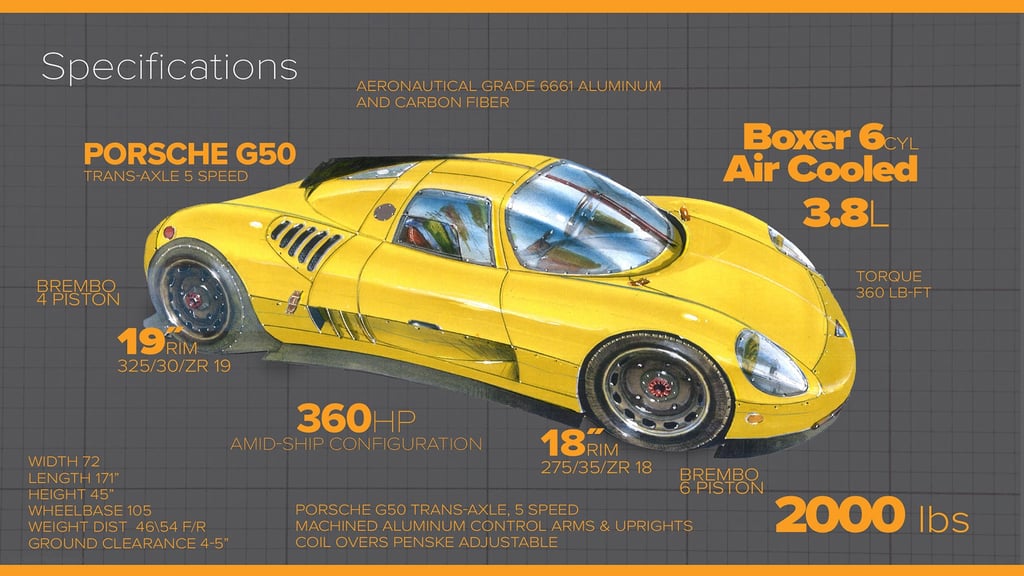
Although this car has design cues from the specified era, it is built using modern materials and construction methods, which include aircraft quality aluminum, TIG welded monocoque/tub, aluminum billet machined control arms and other suspension components.
The drivetrain is a (last generation) air cooled boxer engine with electronic fuel injection, and with an expected output of close to 400 HP, married to a G5 - 5 speed transaxle adapted for a mid-engine configuration. This combination has resulted a vehicle with a very low center of gravity that weighs around 900Kg, with 80% of this weight distributed between the axles.
To date I have produced a proof of concept, which is a fully functional prototype vehicle that is currently undergoing the validating process. Although the prototype body shell is made from composite material (with tooling suitable to produce a carbon body), the finished car will have a hand-formed aluminum body, possibly with a contrasting lower body section made from carbon. The finished car will essentially be a piece of moving art with the spirit of a fighter plane.
AHM: Although the car has been welcomed by the Carrera Panamericana event organizers, entering the prototype car and risking potential damage or even destroying it is too great, so instead I have decided to introduce it to the world initially through a schedule of private events, ending with a presentation at the Petersen Museum in LA.
This car has been a very ambitious personal project, which you could say is my “Opera Prima”. It has opened the door for me to consider building other cars with a similar concept, paying homage to other very relevant brands such as Maserati, Alfa Romeo, Aston Martin, and Jaguar, etc.
These cars would not be re-creations nor reproductions of anything that already exists—they would instead be unique products of my imagination, created as if I was wearing the shoes of Carlo Abarth or Medardo Fantuzzi or other influential designers from that era. I know it could sound pretentious but I’m willing to give it a go and see what happens!